A paint roller frame determines how efficiently paint is applied, how comfortable the tool feels during use, and how long it lasts under jobsite conditions. For most professional applications, a durable 5-wire cage frame with ergonomic grip and standard thread compatibility delivers the best balance of performance and cost. Choosing the right size and structure depends on surface area, coating type, and working height.
A paint roller frame (or simply roller frame) is the structural component that holds the roller cover and connects to a handle or extension pole. While often overlooked, it directly affects:
Rotation smoothness → even paint distribution
Structural rigidity → reduced flex during pressure application
User fatigue → grip design and weight balance
Compatibility → fit with roller covers and extension poles
For contractors and distributors, selecting a high-quality roller frame minimizes complaints related to wobbling, uneven coating, or premature failure.
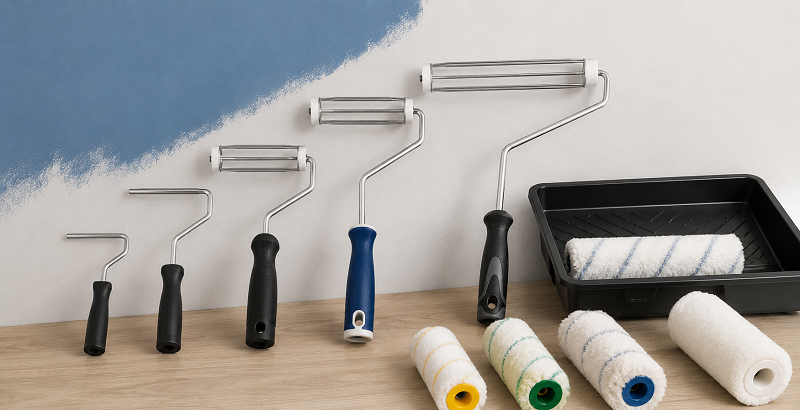
The most widely used design in professional painting.
Key Features:
Multiple spring wires hold the roller cover securely
Smooth rolling action with reduced slipping
Compatible with standard core roller covers
Best For:
General wall painting, commercial projects, and high-frequency use
Uses locking end caps to secure the roller cover.
Key Features:
Firm grip on roller sleeves
Reduced risk of cover slippage
Slightly more complex to replace covers
Best For:
Heavy-duty applications and thicker coatings
Designed to accommodate multiple roller sizes.
Key Features:
Expandable width
Versatile for different project needs
Best For:
Contractors handling varied job requirements
Compact version for tight or detailed areas.
Key Features:
Lightweight and easy to control
Compatible with small roller covers (2”–4”)
Best For:
Cabinets, trim, and confined spaces
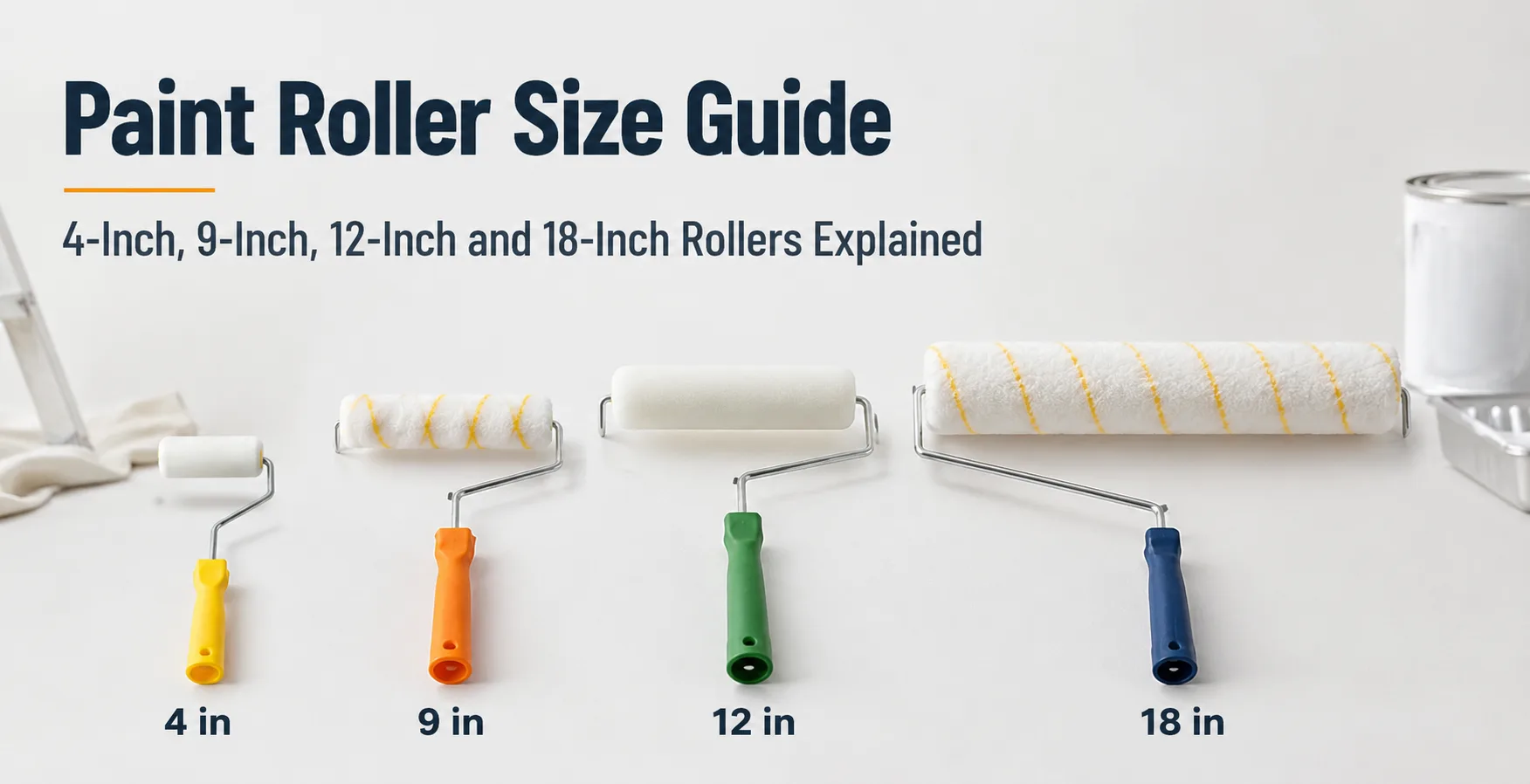
| Frame Size | Typical Use Case |
2”–4” | Detail work, edges, small surfaces |
7” | Medium areas, DIY and light commercial |
9” | Standard walls and ceilings |
12”–18” | Large-scale commercial or industrial painting |
9-inch roller frame is the industry standard for most wall painting
18-inch frames significantly increase productivity on large surfaces but require more control and strength
Smaller frames improve precision but reduce coverage speed
Large surfaces benefit from wider frames, while smaller or detailed areas require compact options.
Steel wire frames with chrome plating offer durability and rust resistance
Reinforced shank designs prevent bending under pressure
Soft-grip handles reduce fatigue during extended use
Balanced weight improves control and consistency
Standard threaded handles allow connection to extension poles
Frame diameter must match roller cover core size
Most roller frames are designed to fit standard roller covers (typically 38 mm or 44 mm core diameter). However, not all frames are fully interchangeable.
Key compatibility factors include:
Core diameter of the roller cover
Frame width vs roller sleeve size
Thread type for extension poles
For bulk buyers, ensuring standardization across product lines is critical to avoid mismatch issues in the field.
Professional painters typically prefer:
5-wire cage frames for smooth rolling
9-inch or 18-inch sizes depending on project scale
Heavy-duty steel construction for durability
Ergonomic grips for long working hours
Consistency in rotation and structural strength are the top priorities in professional environments.
Most modern roller frames include a universal threaded handle (commonly 3/4" ACME thread), making them compatible with standard extension poles.
However, performance depends on:
Secure thread connection
Frame rigidity to prevent wobbling at height
Proper weight distribution for overhead work
From a manufacturing perspective, quality is determined by:
High-carbon steel ensures rigidity
Chrome or zinc coating prevents corrosion
Even rotation without friction improves paint application
Weak joints lead to bending or misalignment
Anti-slip materials enhance control and safety
Reliable manufacturers implement strict QC processes, including load testing and rotation consistency checks.
Selecting low-cost frames with weak wire structures → leads to bending
Using incorrect frame size → reduces efficiency or control
Ignoring compatibility with roller covers → causes slippage
Overlooking ergonomic design → increases fatigue in long projects
Pair the frame with the correct roller cover nap length
Maintain even pressure during application
Clean and dry frames after use to extend lifespan
Use extension poles for high or large surfaces to improve efficiency
A paint roller frame is more than a simple holder—it directly influences painting speed, finish quality, and user comfort. Selecting the right type, size, and build quality ensures better performance across residential, commercial, and industrial applications. For distributors and contractors, standardizing on reliable roller frame specifications can significantly reduce operational issues and improve overall project outcomes.
It holds the roller cover and enables smooth paint application across surfaces.
A 9-inch frame is the most commonly used size for standard wall painting.
Yes, larger frames cover more area quickly but require better control and strength.
High-quality frames can last for years with proper maintenance and cleaning.
Yes, they are designed for repeated use as long as they remain structurally intact.