Danyang Pengyu Tools Co., Ltd.

Telescopic vs Fixed Extension Pole: Which One Is Better?

Table of Content [Hide]

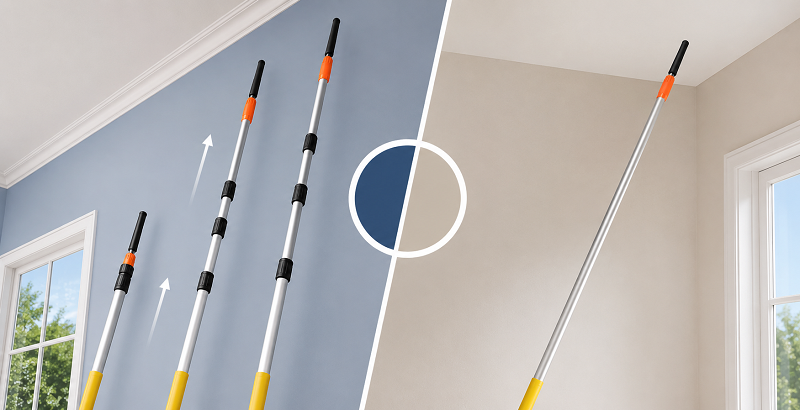
    Telescopic_vs_Fixed_Extension_Pole_Which_One_Is_Better.png


    For most professional painting applications, telescopic extension poles offer greater flexibility and efficiency, especially when working at varying heights. Fixed extension poles, however, provide superior rigidity and control in tasks that require consistent pressure and stability. The better choice depends on working height, surface type, and precision requirements.


    What Is the Difference Between a Telescopic and Fixed Extension Pole?

    A roller extension pole—also referred to as a paint roller extension pole—is designed to extend reach when using roller frames for walls, ceilings, and high surfaces.

    • Telescopic Extension Pole
      Adjustable in length using locking mechanisms (twist-lock or lever-lock), allowing users to extend or retract based on the task.

    • Fixed Extension Pole
      Manufactured at a single, non-adjustable length, offering a solid, one-piece structure with no moving parts.

    From a product engineering perspective, the key difference lies in adjustability vs structural integrity.


    When Should You Use a Telescopic Extension Pole?

    1. Variable Working HeightsTelescopic poles are ideal when switching between walls, ceilings, and stairwells, where height requirements change frequently.

    2. Indoor Painting Projects

    Residential and commercial interior jobs benefit from adjustable length without needing multiple tools.

    3. Storage and Transportation Efficiency

    Retractable poles are easier to store and transport, especially for contractors handling multiple job sites.

    4. Multi-Purpose Use

    A single telescopic paint roller extension pole can replace several fixed-length poles, reducing inventory needs.


    When Should You Use a Fixed Extension Pole?

    1. High-Precision Work

    Fixed poles provide better control due to their rigid structure, making them suitable for applications requiring consistent pressure.

    2. Heavy-Duty Coatings

    When applying thicker paints or coatings, fixed poles minimize flex and improve force transfer.

    3. Repetitive Industrial Tasks

    In environments where the same height is used continuously, fixed poles offer reliability without adjustment downtime.

    4. Maximum Durability Requirements

    With no locking mechanisms, fixed poles have fewer failure points and generally longer service life.


    Telescopic vs Fixed Extension Pole: Performance Comparison

    FeatureTelescopic Extension PoleFixed Extension Pole

    Adjustability

    High

    None

    Stability

    Moderate

    High

    Portability

    Excellent

    Limited

    Durability

    Moderate (depends on lock quality)

    Excellent

    Versatility

    High

    Low

    Best Use

    Multi-height projects

    Consistent-height tasks


    Which Extension Pole Is Better for Painting Ceilings?

    Telescopic poles are typically more effective for ceiling work because they allow users to adjust length based on ceiling height and working position. This reduces strain and improves accessibility.

    However, for large-scale industrial ceilings where height is consistent, fixed poles may provide better long-term stability.


    Do Professional Painters Prefer Telescopic or Fixed Poles?

    Most professional painters use both:

    • Telescopic poles for general-purpose work and flexibility

    • Fixed poles for specialized tasks requiring precision and strength

    This dual-tool approach maximizes efficiency while maintaining application quality.


    What Length Extension Pole Should You Choose?

    General Guidelines

    • 1–2 meters (3–6 ft): Walls and low ceilings

    • 2–4 meters (6–12 ft): Standard ceilings and exterior walls

    • 4+ meters (12+ ft): High ceilings, industrial or commercial buildings

    Telescopic poles cover multiple ranges, while fixed poles require selecting a specific length for each application.


    What Materials Are Best for Extension Poles?

    Aluminum

    • Lightweight and corrosion-resistant

    • Suitable for general-purpose use

    Fiberglass

    • Stronger and more rigid

    • Electrically non-conductive (important for safety in certain environments)

    Steel

    • Highly durable but heavier

    • Typically used in heavy-duty industrial applications

    Material selection directly impacts performance, especially for long roller extension poles used in demanding conditions.


    Are All Extension Poles Compatible with Roller Frames?

    Most modern paint roller extension poles use universal threaded connections (commonly ACME threads), making them compatible with standard roller frames.

    However, compatibility should always be verified based on:

    • Thread type

    • Load capacity

    • Frame balance


    What Defines a High-Quality Extension Pole?

    From a manufacturing and sourcing perspective, quality depends on:

    1. Locking Mechanism (for Telescopic Poles)

    • Secure, slip-resistant locking system

    • Smooth adjustment without jamming

    2. Structural Rigidity

    • Minimal flex when extended

    • Reinforced joints and connections

    3. Surface Finish

    • Anti-corrosion coating

    • Non-slip grip for better handling

    4. Load-Bearing Capacity

    • Ability to support roller frames under pressure without bending

    Reliable suppliers conduct durability testing, including extension stability and load resistance.


    Common Mistakes When Choosing an Extension Pole

    • Choosing telescopic poles with weak locking systems → leads to slipping during use

    • Using fixed poles for variable-height jobs → reduces efficiency

    • Ignoring material strength → causes bending or instability

    • Overextending telescopic poles beyond recommended limits → compromises control


    How to Choose the Right Extension Pole for Your Business

    For distributors and contractors, selection should consider:

    • Application scenarios (residential vs industrial)

    • Product range flexibility (telescopic vs fixed mix)

    • Customer demand for portability vs durability

    • Compatibility with existing roller frame systems

    Offering both telescopic and fixed roller extension pole options allows you to cover a broader market and meet diverse user needs.


    Conclusion

    Telescopic and fixed extension poles serve different roles in professional painting. Telescopic poles provide adaptability and convenience, making them ideal for most general applications. Fixed poles deliver superior strength and control, making them better suited for specialized or heavy-duty tasks. Selecting the right type—and ensuring quality manufacturing standards—directly impacts efficiency, safety, and finish quality.


    FAQs

    What is a roller extension pole used for?

    It extends the reach of a roller frame, allowing painters to work on high or hard-to-reach surfaces without ladders.

    Are telescopic extension poles durable?

    Yes, high-quality telescopic poles are durable, but their lifespan depends on the strength of the locking mechanism.

    Which is better for beginners?

    Telescopic poles are generally more user-friendly due to their adjustable length.

    Can extension poles be used for exterior painting?

    Yes, both telescopic and fixed poles are commonly used for exterior walls and high surfaces.

    Do longer extension poles reduce control?

    Yes, as length increases, control decreases, especially with telescopic poles if not fully stabilized.


    References
    PENGYU
    We use cookies to offer you a better browsing experience, analyze site traffic and personalize content. Part of the tracking is necessary to ensure SEO effectiveness,
    By using this site, you agree to our use of cookies. Visit our cookie policy to learn more.
    Reject Accept