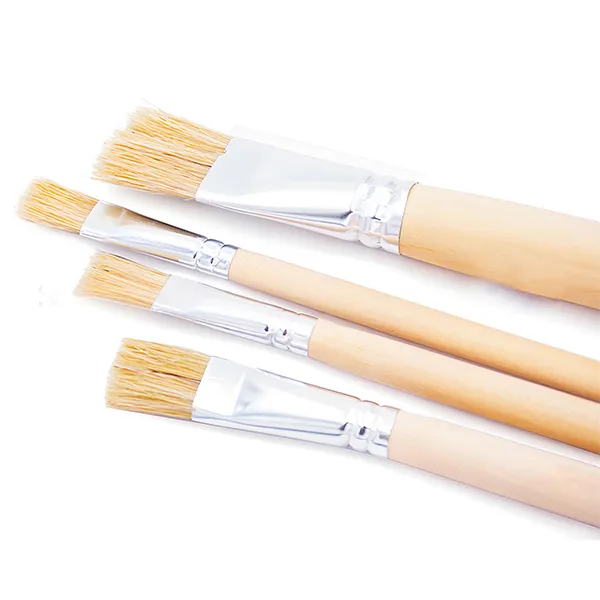
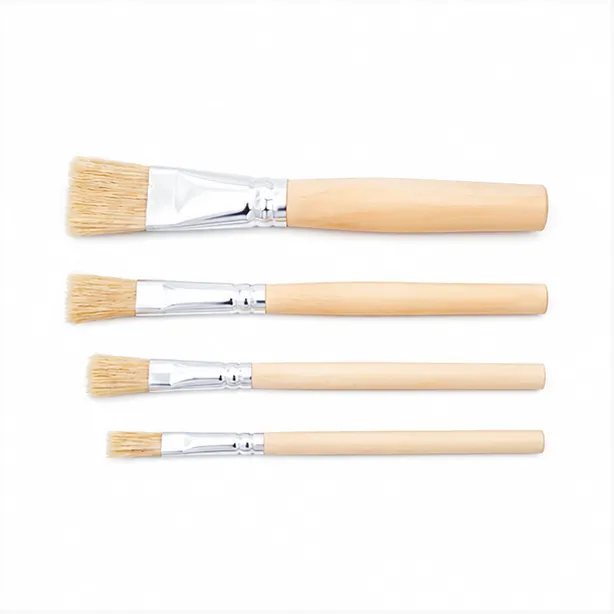
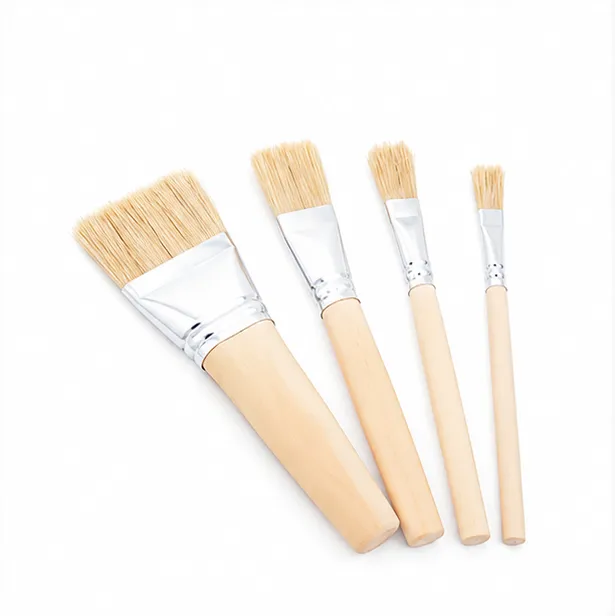
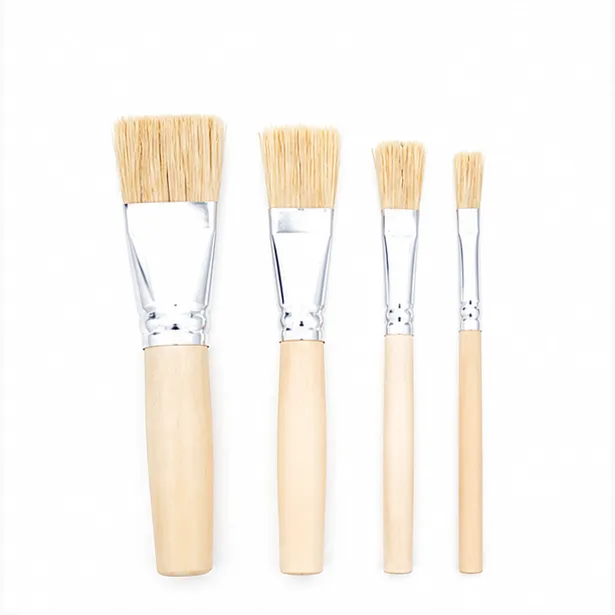
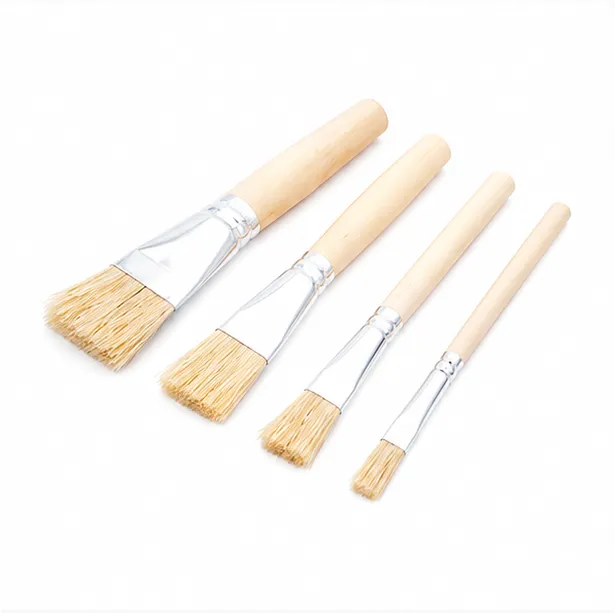
Natural bristles – Ensures optimal paint pickup
Reinforced ferrules – Prevents bristle shedding
Comfortable grip – Boosts control and ease of use
Versatile design – Perfect for intricate details and blending techniques
Different brush shapes are used for different techniques:
Flat brushes: broad strokes, blending, and covering large areas
Round brushes: detail work and controlled lines
Filbert brushes: soft edges and smooth blending
Fan brushes: texture creation and blending effects
Angled brushes: precision work and sharp edges
Many artists use a combination of brush types in one painting.
Both can be suitable depending on the painting style:
Natural bristle brushes: often preferred for thick oil paints and textured brushwork due to their stiffness and paint-holding ability
Synthetic brushes: smoother application, better flexibility, and easier cleaning
Many artists combine both for different techniques and finishes.
The ideal size depends on the project:
Small brushes: details, highlights, and fine lines
Medium brushes: blending and general painting
Large brushes: backgrounds and large coverage areas
Using multiple brush sizes helps create depth and precision in oil paintings.
Oil painting brushes should be cleaned immediately after use. Remove excess paint first, then clean with mineral spirits, brush cleaner, or an appropriate solvent. Wash gently with soap and lukewarm water afterward, reshape the bristles, and let the brush dry completely.
Never allow oil paint to dry in the bristles. Clean brushes promptly after use and avoid leaving them soaking in solvent for long periods, as this may damage the bristles. Proper storage also helps maintain brush shape and lifespan.
Yes, but it depends on the bristle type. Synthetic oil painting brushes can often be used with acrylic paint, while natural bristle brushes may wear faster with water-based acrylics. Many artists prefer separate brushes for oil and acrylic painting.
Call
Address
East side of Erling Town, Danyang City, Jiangsu Province, China