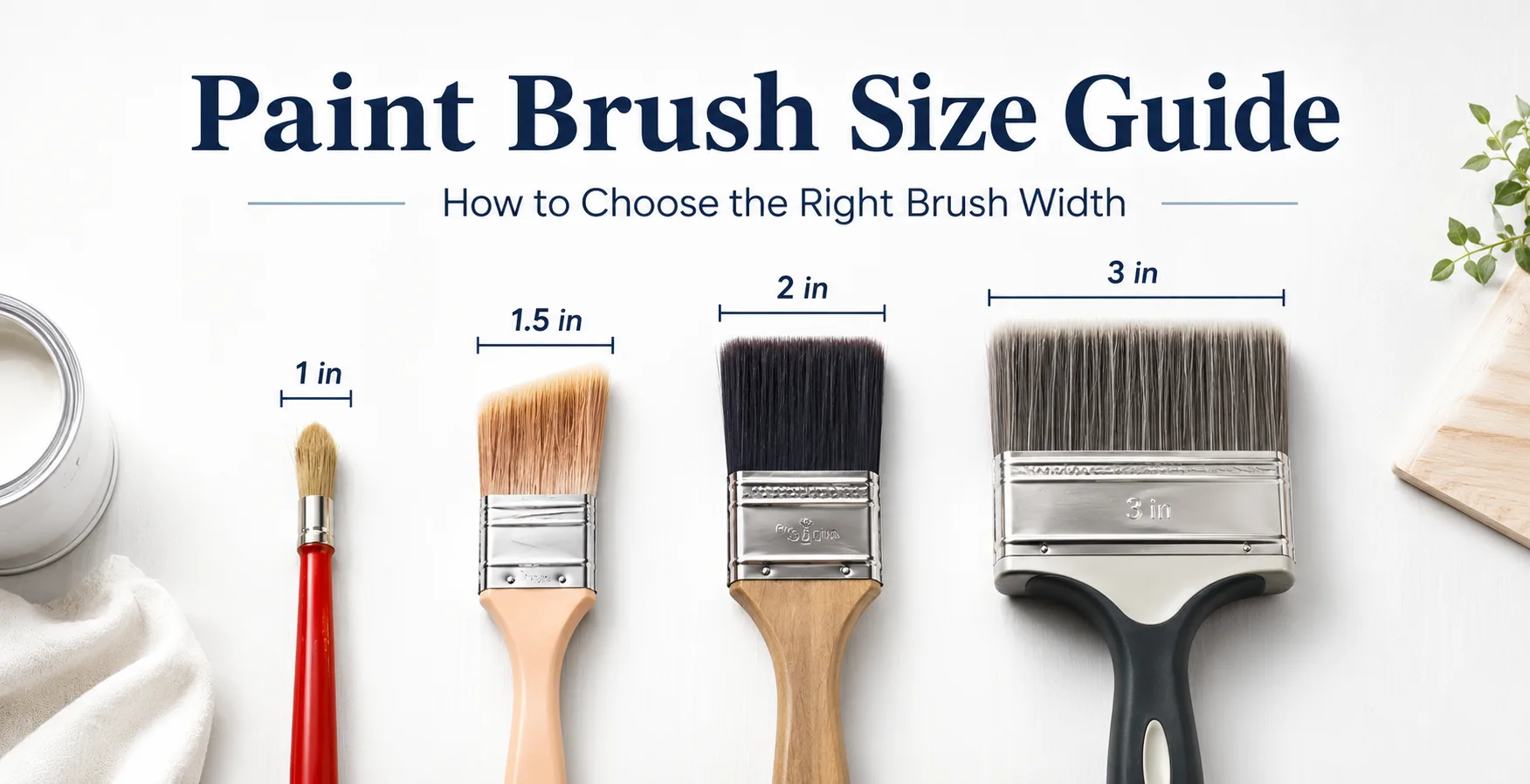
The right Paint Brush width depends on the surface size, edge precision, paint type, and working speed required. Small brushes are better for trim, corners, touch-ups, and detailed work. Medium brushes are suitable for doors, cabinets, frames, and general home painting. Wider brushes, especially a Wall Brush, are better for large surfaces, rough walls, masonry, fences, and exterior coating work.
As a practical rule, a 1–2 inch brush is used for detail and narrow areas, a 2–3 inch Flat Brush is suitable for general painting, and a 4–6 inch Wall Brush is preferred when the goal is fast coverage on larger surfaces. Choosing only by price or brush size can lead to poor finish quality, slower work, and unnecessary paint waste.
Why Paint Brush Width Matters
Brush width affects how much paint the brush can carry, how accurately the painter can control the stroke, and how quickly the surface can be covered. A brush that is too narrow slows down work on large surfaces. A brush that is too wide becomes difficult to control around edges, corners, and detailed areas.
For professional painters, contractors, wholesalers, and hardware retailers, brush size selection is not a small detail. It affects user experience, product satisfaction, and repeat purchasing. A well-planned Paint Brush range should include different widths for cutting-in, general coating, and large-area coverage.
Common Paint Brush Sizes and Their Best Uses
| Brush Width | Best Use | Recommended Brush Type | Buyer Consideration |
|---|
| 1 inch | Touch-ups, narrow gaps, small details | Detail brush or small Flat Brush | Good for precision, but slow for larger areas |
| 1.5 inch | Window frames, corners, crafts, small trim | Flat or angled brush | Useful for controlled work in tight spaces |
| 2 inch | Trim, doors, cabinets, furniture edges | Flat Brush or slanted brush | One of the most practical sizes for general use |
| 2.5 inch | Cutting-in, door frames, medium panels | Flat Brush or angled brush | Good balance between control and coverage |
| 3 inch | Doors, panels, fences, medium wall areas | Flat Brush | Efficient for broader strokes without losing too much control |
| 4 inch | Walls, masonry, exterior boards, large panels | Wall Brush | Better paint loading and faster coverage |
| 5–6 inch | Large walls, rough surfaces, exterior coating | Wall Brush | High coverage speed, but less suitable for precision work |
1 Inch Paint Brush: Best for Small Details and Touch-Ups
A 1 inch Paint Brush is designed for small areas where precision matters more than speed. It is commonly used for touch-up work, narrow gaps, small corners, furniture details, decorative edges, and repair painting.
When Should You Use a 1 Inch Brush?
Use a 1 inch brush when the painting area is too narrow for a standard brush. It is useful around hardware, small moldings, window grids, and detailed furniture parts. However, it is not efficient for doors, walls, or large panels because the coverage area is too limited.
Commercial Value of Small Brushes
Small brushes are often purchased as part of brush sets. They are attractive for DIY users, craft users, and repair jobs. For wholesalers, 1 inch brushes can be positioned as complementary products rather than the main brush size for professional wall painting.
2 Inch Paint Brush: A Practical Size for General Painting
A 2 inch Paint Brush is one of the most commonly used sizes because it offers a good balance between control and coverage. It can be used for trim, doors, cabinets, furniture, window frames, and small wall areas.
Is a 2 Inch Brush Good for Beginners?
Yes. A 2 inch brush is usually easier to control than a wider brush and more efficient than a very narrow brush. For many home painting tasks, it is a practical starter size. When made as a Flat Brush, it can handle straight strokes on panels and furniture. When made as an angled brush, it works well for edges and cutting-in.
Best Uses for a 2 Inch Flat Brush
Painting wooden doors and cabinet frames
Applying paint to furniture edges and panels
Touching up wall corners and repaired areas
Painting skirting boards, frames, and narrow trim
2.5 Inch Brush: Strong Balance Between Control and Speed
A 2.5 inch brush is often preferred by experienced painters because it provides more coverage than a 2 inch brush while still offering good control. It is especially useful for cutting-in along walls, painting medium-width trim, and coating door frames.
Why Many Professionals Like 2.5 Inch Brushes
The 2.5 inch size allows painters to carry more paint while maintaining accurate movement. This reduces the need to reload the brush frequently and helps maintain a steady painting rhythm. For professional users, this can improve productivity without sacrificing line quality.
For retailers and distributors, 2.5 inch brushes are a strong option for mid-range and professional-grade product lines. They are practical, easy to explain, and suitable for many interior painting jobs.
3 Inch Flat Brush: Good for Doors, Panels and Medium Areas
A 3 inch Flat Brush is suitable for broader surfaces where speed matters but the painter still needs better control than a large Wall Brush. It is commonly used for doors, fences, tabletops, shelves, wooden panels, and medium-sized wall sections.
When Is a 3 Inch Brush Better Than a 2 Inch Brush?
A 3 inch brush is better when the surface is wider and mostly flat. It holds more paint and covers more area per stroke, which helps reduce working time. However, it may feel too large for narrow trim, small corners, and detailed work.
Best Applications for a 3 Inch Flat Brush
Interior and exterior doors
Cabinet side panels and furniture boards
Wooden fences and railings
Large trim sections
General coating on medium flat surfaces
4 Inch Wall Brush: Better for Larger Surface Coverage
A 4 inch Wall Brush is designed for faster paint application on larger surfaces. Compared with a small Flat Brush, it carries more paint and covers wider areas with each stroke. This makes it suitable for walls, exterior boards, masonry, fences, and textured surfaces.
Should You Use a Wall Brush or a Roller?
For large smooth walls, a roller is usually faster. However, a Wall Brush is still valuable for rough surfaces, edges, corners, repair areas, masonry, and surfaces where a roller cannot push paint deeply enough. In many professional jobs, painters use rollers for the main wall area and Wall Brush products for corners, edges, and textured sections.
What Makes a Good 4 Inch Wall Brush?
A good 4 inch Wall Brush should have strong bristle density, stable paint release, a comfortable handle, and a durable ferrule. Since wider brushes carry more paint, the handle and ferrule must be strong enough to withstand repeated pressure during use.
5–6 Inch Wall Brush: For Large Walls, Rough Surfaces and Exterior Work
Wider Wall Brush sizes, such as 5 inch and 6 inch, are mainly used for large-area coating. They are useful for rough walls, concrete, brick, exterior surfaces, waterproofing coatings, primers, and heavy-duty applications where high paint loading is required.
When Should Buyers Choose a 5–6 Inch Wall Brush?
A wider Wall Brush is suitable when the user wants faster coverage and the surface does not require fine edge control. It is especially useful for construction painting, exterior maintenance, industrial coating, and large renovation projects.
Limitations of Extra-Wide Brushes
Extra-wide brushes are not ideal for detailed work. They are heavier when loaded with paint and require more hand strength. For inexperienced users, a very wide brush may create uneven pressure, visible marks, or poor edge control.
How to Choose Brush Width by Painting Task
For Trim, Frames and Narrow Edges
Choose a 1.5 inch to 2.5 inch brush. Smaller widths provide better control and reduce the risk of painting outside the target area. For clean edge work, an angled brush may be better than a standard Flat Brush.
For Doors and Cabinets
A 2 inch or 3 inch Flat Brush is usually suitable. A 2 inch brush provides more control around details, while a 3 inch brush improves speed on larger flat panels.
For Walls and Large Flat Areas
A 4 inch Wall Brush is a practical choice for edges, corners, rough sections, and areas where rollers cannot reach. For very large or textured surfaces, 5–6 inch Wall Brush options may improve productivity.
For Furniture and Decorative Work
Use smaller brush widths, usually between 1 inch and 2 inch. These sizes allow better control over corners, edges, grooves, and shaped surfaces.
For Fences and Exterior Wood
A 3 inch Flat Brush or 4 inch Wall Brush is often suitable. For wide fence boards, a larger brush improves coverage. For railings and narrow pieces, smaller brushes offer better control.
How Brush Width Affects Paint Consumption and Finish
Brush width influences not only speed but also paint consumption. A wider brush carries more paint, which can improve coverage on large areas but may also cause dripping if the user overloads the brush. A narrow brush uses less paint per stroke but requires more passes, which can increase labor time.
For smooth surfaces, using an oversized brush may leave visible brush marks if pressure is not controlled. For rough surfaces, using a brush that is too narrow may fail to push paint into texture gaps efficiently. Matching brush width to the surface helps balance paint use, finish quality, and working speed.
How to Build a Practical Paint Brush Size Range for Sale
For wholesalers, importers, and hardware retailers, a complete Paint Brush product line should not rely on one size only. Different customers buy brushes for different jobs, so product range planning should reflect real use cases.
Recommended Basic Product Range
1 inch: Touch-ups, details, repair work, craft use
2 inch: General trim, furniture, cabinet, and home painting
2.5 inch: Cutting-in, frames, and professional interior work
3 inch Flat Brush: Doors, panels, fences, and medium surfaces
4 inch Wall Brush: Walls, masonry, large panels, and exterior work
5–6 inch Wall Brush: Heavy-duty coating and large-area coverage
Single Brushes vs Brush Sets
Brush sets are attractive for DIY and retail customers because they provide several sizes in one package. Single brushes are better for professional users who already know the exact size they need. A balanced product strategy can include both individual Paint Brush options and multi-size sets.
Common Mistakes When Choosing Paint Brush Size
Using a Small Brush for Large Areas
A small brush gives good control but poor efficiency on large surfaces. It increases working time and may create more overlap marks because the painter needs many repeated strokes.
Using a Wide Brush for Detail Work
A wide brush carries more paint but can be difficult to control around edges, trim, corners, and small decorative areas. This often leads to messy lines and extra cleanup work.
Ignoring Brush Weight After Paint Loading
A dry brush may feel light, but a wide Wall Brush becomes heavier after absorbing paint. For long painting jobs, handle comfort and brush balance become important purchasing factors.
Choosing Size Without Considering Surface Texture
Smooth furniture panels, rough masonry, narrow frames, and large walls all require different brush widths. Surface texture should always be considered together with brush size.
FAQ: Paint Brush Size Selection
What size Paint Brush is best for general home use?
A 2 inch or 2.5 inch Paint Brush is usually the most practical for general home painting. It provides a good balance of control and coverage for trim, furniture, doors, and small wall areas.
What size Flat Brush should I use for doors?
A 2 inch or 3 inch Flat Brush is commonly used for doors. A 2 inch brush is better around edges and details, while a 3 inch brush is more efficient on large flat door panels.
What size brush is best for painting walls?
For wall edges, corners, and textured sections, a 4 inch Wall Brush is a practical choice. For large smooth walls, many painters use a roller for the main area and a Wall Brush for edges and difficult sections.
Is a wider brush always better?
No. A wider brush covers more area, but it is harder to control. Wide brushes are better for large surfaces, while smaller brushes are better for precision work, trim, and detailed painting.
What Paint Brush sizes should a wholesaler stock?
A practical wholesale range should include 1 inch, 2 inch, 2.5 inch, 3 inch, 4 inch, and larger Wall Brush sizes. This covers touch-ups, general painting, professional cutting-in, and large-area coating needs.
Final Recommendation
Choosing the right Paint Brush width should be based on the painting task, surface size, finish requirement, and user experience level. A small brush provides better control, a medium Flat Brush offers versatile performance, and a wider Wall Brush improves speed on larger or rougher surfaces.
For buyers and distributors, the best approach is to offer a complete size range with clear application guidance. This helps customers choose the right brush faster, improves painting results, and increases the long-term value of the product line.
 English