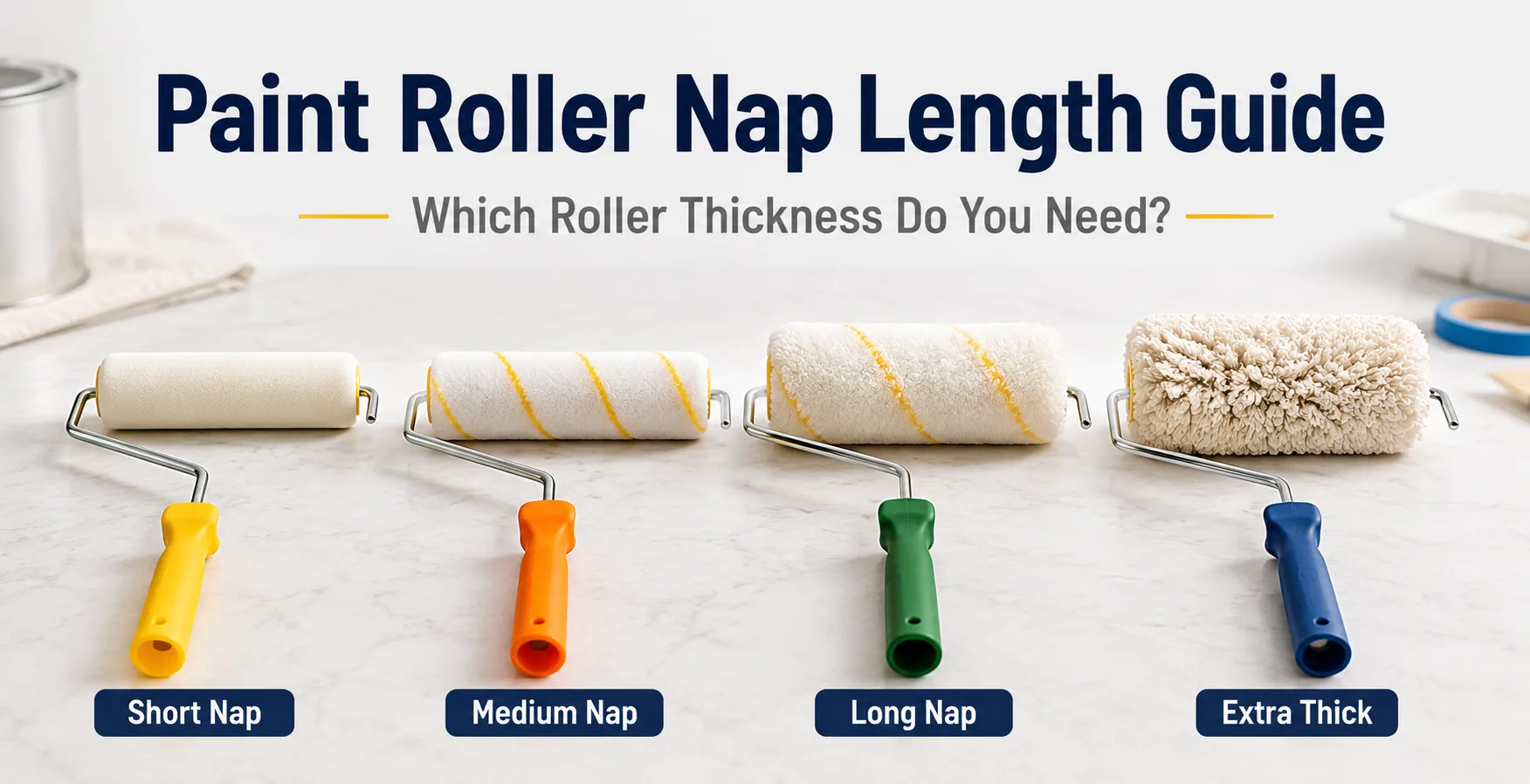
The right Roller Brush nap length depends mainly on surface texture. Smooth surfaces need a short nap or Foam Roller for a finer finish. Standard interior walls usually work well with a medium nap Polyester Roller. Rough plaster, brick, concrete, stucco, and exterior walls need a thicker nap, often with a Wool Roller, because longer fibers can carry more paint and reach deeper surface texture.
Choosing the wrong roller thickness can cause roller marks, poor coverage, paint waste, lint problems, uneven texture, and extra labor. For professional painters, contractors, wholesalers, and paint tool buyers, nap length is one of the most important specifications when selecting roller covers.
What Is Paint Roller Nap Length?
Paint roller nap length refers to the thickness or pile height of the roller cover fibers. A short nap has shorter fibers and creates a smoother finish. A long nap has longer fibers and holds more paint, making it better for rough or uneven surfaces.
In the market, nap length may be described in inches or millimeters. Common options include 1/4 inch, 3/8 inch, 1/2 inch, 3/4 inch, 1 inch, and above. The exact naming may vary by country, but the selection principle is the same: smoother surfaces need shorter nap, rougher surfaces need longer nap.
Paint Roller Nap Length Comparison Table
| Nap Length | Approx. Metric S
ize | Best Surface | Recommended Roller Type | Finish Result |
|---|
| Foam / Very Short Nap | 0–5 mm | Cabinets, doors, smooth wood, metal, fine panels | Foam Roller | Very smooth finish with minimal texture |
| 1/4 inch | 6 mm | Very smooth walls, plaster, drywall, trim panels | Short nap Polyester Roller | Smooth, controlled paint film |
| 3/8 inch | 9–10 mm | Standard interior walls and ceilings | Polyester Roller | Balanced coverage and smoothness |
| 1/2 inch | 12–13 mm | Slightly textured walls, older drywall, light plaster | Polyester Roller or wool blend roller | Better coverage with moderate texture |
| 3/4 inch | 18–20 mm | Textured walls, rough plaster, exterior siding | Wool Roller or heavy-duty synthetic roller | Strong paint loading and deeper coverage |
| 1 inch and above | 25 mm+ | Brick, concrete, stucco, masonry, rough exterior walls | Wool Roller | Maximum paint capacity for rough surfaces |
Foam Roller and Very Short Nap: Best for Smooth Finishes
A Foam Roller is usually selected for smooth surfaces where users want minimal texture. It does not have a traditional fabric nap, but it performs a similar role to an ultra-short roller cover. Foam rollers are commonly used for cabinets, doors, furniture, metal surfaces, smooth wood panels, and small finishing work.
When Should You Use a Foam Roller?
Use a Foam Roller when the surface is smooth and the coating needs to level well. It is practical for water-based paint, varnish, stains, primers, and some clear coatings, depending on foam density and coating viscosity.
For buyers, Foam Roller products are suitable for retail markets because they are easy to understand and often used for DIY painting, furniture renovation, and touch-up work. However, they should not be promoted as the best choice for rough wall surfaces.
Advantages of Foam Rollers
Creates a smooth finish on flat surfaces
Low lint risk compared with low-grade fabric rollers
Useful for doors, cabinets, shelves, furniture, and panels
Cost-effective for small projects and disposable use
Limitations of Foam Rollers
Holds less paint than fabric rollers
Not suitable for rough walls, brick, or stucco
May create bubbles if used too fast or with unsuitable paint
Can wear quickly on abrasive surfaces
1/4 Inch Nap: For Very Smooth Walls and Fine Surfaces
A 1/4 inch roller nap is suitable for very smooth drywall, plaster, smooth ceilings, flat doors, and trim panels. It leaves less texture than a medium or thick nap roller, making it suitable when finish appearance is more important than paint loading capacity.
Who Should Choose a 1/4 Inch Roller Brush?
A 1/4 inch Roller Brush is suitable for painters working on prepared, smooth interior surfaces. It can help reduce orange-peel texture and roller marks when the wall is already in good condition.
However, because the nap is short, it does not carry much paint. On large walls, users may need to reload the roller more frequently. On rough surfaces, it may fail to fill low spots and surface texture.
3/8 Inch Nap: The Most Practical Choice for Standard Interior Walls
A 3/8 inch nap is one of the most commonly used roller thicknesses for interior wall painting. It provides a good balance between paint pickup, smooth finish, and working speed. For many standard residential and commercial wall projects, this is a practical default choice.
Why Is 3/8 Inch Nap So Popular?
Most interior walls are not perfectly smooth, but they are also not extremely rough. A 3/8 inch nap gives enough fiber length to hold paint and cover minor wall texture without creating excessive surface pattern.
A Polyester Roller in this nap length is especially popular because it is affordable, durable, and compatible with many water-based wall paints. For wholesalers and hardware stores, 3/8 inch polyester roller covers are usually a core product category.
Best Applications
1/2 Inch Nap: For Slightly Textured Walls and Better Paint Loading
A 1/2 inch nap roller is suitable for surfaces with light to medium texture. It holds more paint than a 3/8 inch roller and can cover uneven areas more effectively. This makes it useful for older walls, textured plaster, medium drywall texture, and repainting projects where the wall surface is not perfectly flat.
When Is 1/2 Inch Better Than 3/8 Inch?
Choose 1/2 inch nap when the wall has visible texture or when faster coverage is needed. The longer fibers help the roller reach shallow low spots and carry more paint per load. However, it may leave a slightly more textured finish than a shorter nap roller.
For commercial buyers, 1/2 inch rollers are useful for contractor-grade product lines because they work well in real renovation conditions, where walls are often imperfect.
3/4 Inch Nap: For Textured Walls and Rougher Surfaces
A 3/4 inch nap roller is designed for rougher surfaces that need more paint capacity. It is commonly used on textured walls, rough plaster, exterior siding, block walls, and uneven surfaces. At this thickness, roller material becomes especially important because poor-quality fibers may shed, flatten, or release paint unevenly.
Should You Use a Wool Roller for 3/4 Inch Nap?
A Wool Roller or wool-blend roller is often a strong choice for 3/4 inch nap because wool can hold a large amount of paint and release it effectively into surface texture. Heavy-duty synthetic rollers can also work well if the fiber quality and bonding are reliable.
Best Applications
Medium to heavy textured walls
Exterior wall surfaces
Rough plaster and rendered walls
Concrete block and masonry surfaces
Primer or coating work on uneven areas
1 Inch and Longer Nap: For Brick, Concrete, Stucco and Masonry
Rollers with 1 inch nap or longer are used for very rough and porous surfaces. These include brick, concrete, stucco, masonry walls, heavily textured exterior surfaces, and some industrial coating applications. The long fibers carry more paint and help push coating into gaps and surface irregularities.
When Do You Need a Long Nap Roller?
You need a long nap roller when a shorter roller cannot reach into the texture of the surface. On brick or stucco, a short nap roller may only coat the high spots while leaving low areas under-covered. A thicker Wool Roller can improve coverage and reduce the number of passes required.
Important Limitation
Long nap rollers create more surface texture and are not suitable for smooth interior finishes. They can also become heavy when loaded with paint. For professional use, handle strength, roller frame quality, and core stability are important.
How Surface Texture Affects Roller Thickness Selection
Smooth Surfaces
For smooth wood, metal, doors, cabinets, and fine interior panels, use a Foam Roller or very short nap roller. The goal is to reduce texture and create a cleaner finish.
Standard Interior Walls
For common drywall and plaster walls, a 3/8 inch nap Polyester Roller is usually suitable. It offers efficient coverage while keeping the finish reasonably smooth.
Lightly Textured Walls
For slightly uneven or older wall surfaces, a 1/2 inch nap roller can provide better paint loading and coverage than a short nap roller.
Rough Exterior Walls
For rough plaster, masonry, and exterior siding, use 3/4 inch or thicker nap. Wool or wool-blend roller covers are often preferred because they hold more paint and reach uneven texture more effectively.
Brick, Concrete and Stucco
For very rough masonry surfaces, 1 inch or longer nap rollers are often needed. A Wool Roller is usually more practical than a Foam Roller or short nap Polyester Roller for this type of work.
How Paint Type Influences Nap Length
Surface texture is the main factor, but paint type also matters. Thick coatings, primers, masonry paints, and textured coatings often need a roller with stronger paint loading capacity. Thinner paints and smooth finish coatings usually need shorter nap rollers to avoid excessive texture.
Water-Based Wall Paint
For standard water-based wall paint, a Polyester Roller with 3/8 inch or 1/2 inch nap is commonly used. Microfiber and other high-performance synthetic rollers may also provide good pickup and release.
Primer
Primer is often applied with a medium nap roller because coverage and absorption are important. For smooth surfaces, use a shorter nap. For porous or rough surfaces, choose a thicker nap.
Masonry Paint
Masonry paint normally requires a thicker nap roller, especially on brick, concrete, or stucco. Wool Roller options are often suitable because they can carry more coating and work paint into rough texture.
Varnish and Clear Coatings
For varnish, sealers, and clear coatings on smooth surfaces, a Foam Roller or short nap roller may be more suitable. A long nap roller can leave too much texture and may apply the coating unevenly.
Polyester Roller vs Wool Roller: Which Nap Performs Better?
| Feature | Polyester Roller | Wool Roller |
|---|
| Best Use | General interior walls, ceilings, standard painting | Rough walls, masonry, exterior surfaces, heavy coatings |
| Paint Holding Capacity | Moderate to good | High |
| Finish Texture | Smoother depending on nap length | More textured, especially in longer nap |
| Cost | Usually more economical | Usually higher cost |
| Durability | Good when fiber quality is reliable | Strong for heavy-duty use if properly made |
| Commercial Positioning | Broad market, DIY and professional use | Professional, exterior, contractor-grade applications |
A Polyester Roller is usually the practical choice for general painting and cost-sensitive markets. A Wool Roller is better for rough surfaces and professional users who need strong paint loading. The best product range often includes both, with different nap lengths for different surface conditions.
Commercial Buying Factors for Roller Nap Products
Fiber Density
Higher fiber density usually improves paint pickup and release. Sparse roller covers may create uneven coating and require more passes. Buyers should compare not only nap length but also fiber density and construction quality.
Lint and Shedding Control
Loose fibers can damage the final paint finish. This is especially important for smooth walls, cabinets, doors, and decorative surfaces. Low-lint roller covers are more suitable for professional and higher-value markets.
Core Strength
The roller core should resist deformation when saturated with paint. Weak cores may soften, slip, or lose shape during long painting jobs. This is especially important for thicker nap rollers and heavy coatings.
Nap Recovery
A quality roller cover should recover its shape after pressure. If the nap flattens quickly, paint release becomes uneven and the roller may create visible marks.
Edge Design
Beveled or well-finished roller edges can reduce line marks at the sides of each stroke. This is an important detail for professional wall painting and smooth finish applications.
Common Mistakes When Choosing Roller Nap Length
Using a Short Nap on Rough Walls
A short nap roller cannot reach into rough texture effectively. This may leave uncoated low spots and require multiple coats. For rough plaster, concrete, brick, or stucco, choose a thicker nap roller.
Using a Long Nap on Smooth Walls
A long nap roller may apply too much paint and create unnecessary surface texture on smooth walls. For fine finishes, use a Foam Roller or short nap roller instead.
Ignoring Paint Viscosity
Thicker coatings usually need more paint loading capacity, while thinner coatings may require better control. Roller nap length should match both surface texture and coating behavior.
Buying by Price Only
Very low-cost roller covers may shed lint, flatten quickly, or release paint unevenly. For professional users, poor roller quality can increase labor cost, paint waste, and customer complaints.
FAQ: Paint Roller Nap Length
What nap roller should I use for interior walls?
For standard interior walls, a 3/8 inch nap Polyester Roller is usually a practical choice. For slightly textured walls, 1/2 inch nap may provide better coverage.
What roller gives the smoothest finish?
A Foam Roller or very short nap roller usually gives the smoothest finish on flat surfaces such as doors, cabinets, and panels. For smooth walls, a 1/4 inch or 3/8 inch low-lint roller can also work well.
What nap length is best for rough walls?
For rough walls, 3/4 inch nap or thicker is usually recommended. For brick, concrete, stucco, or masonry, 1 inch or longer nap may be needed. A Wool Roller is often suitable for these surfaces.
Is a thicker roller better?
A thicker roller is better for rough surfaces because it holds more paint and reaches texture more effectively. It is not better for smooth surfaces because it can leave too much texture and reduce finish quality.
Can I use a Foam Roller for wall painting?
A Foam Roller can be used for very smooth small wall sections or touch-ups, but it is not the best choice for large walls or textured surfaces. For standard walls, a Polyester Roller with the correct nap length is usually more efficient.
Which roller nap should wholesalers stock?
Wholesalers should usually stock short nap rollers for smooth surfaces, 3/8 inch and 1/2 inch Polyester Roller products for general wall painting, and thicker Wool Roller options for rough walls, masonry, and exterior applications.
Final Recommendation
Paint roller nap length should be selected according to surface texture, paint type, finish requirement, and working efficiency. Foam Roller products are best for smooth surfaces and fine finishes. Short nap rollers work well on smooth walls and panels. Medium nap Polyester Roller products are suitable for general interior painting. Thick nap Wool Roller products are better for rough, textured, and exterior surfaces.
For buyers building a professional Roller Brush product line, the best approach is to offer multiple nap lengths with clear application guidance. This helps customers choose the right roller faster, reduces product misuse, and improves long-term satisfaction with the painting result.
 English