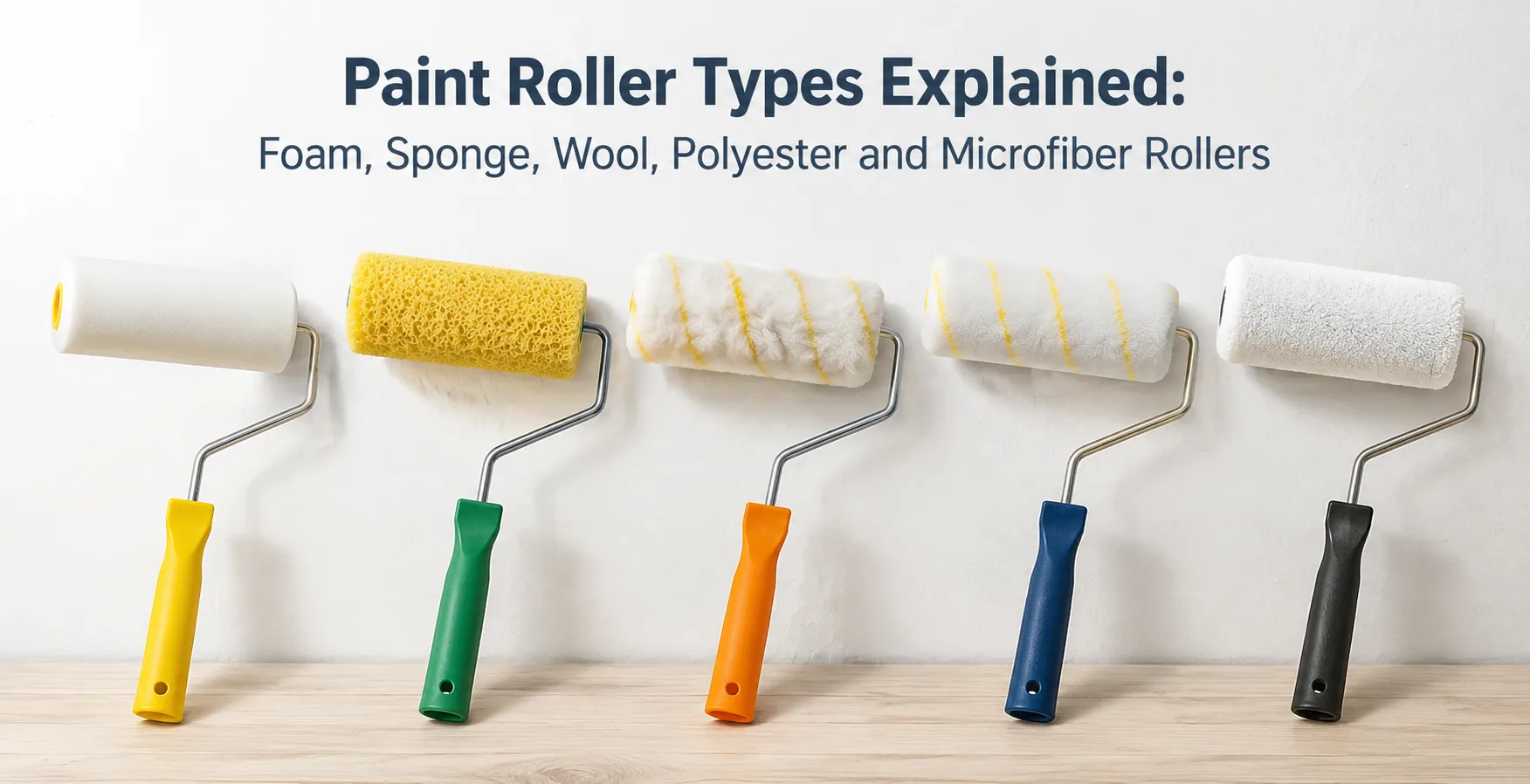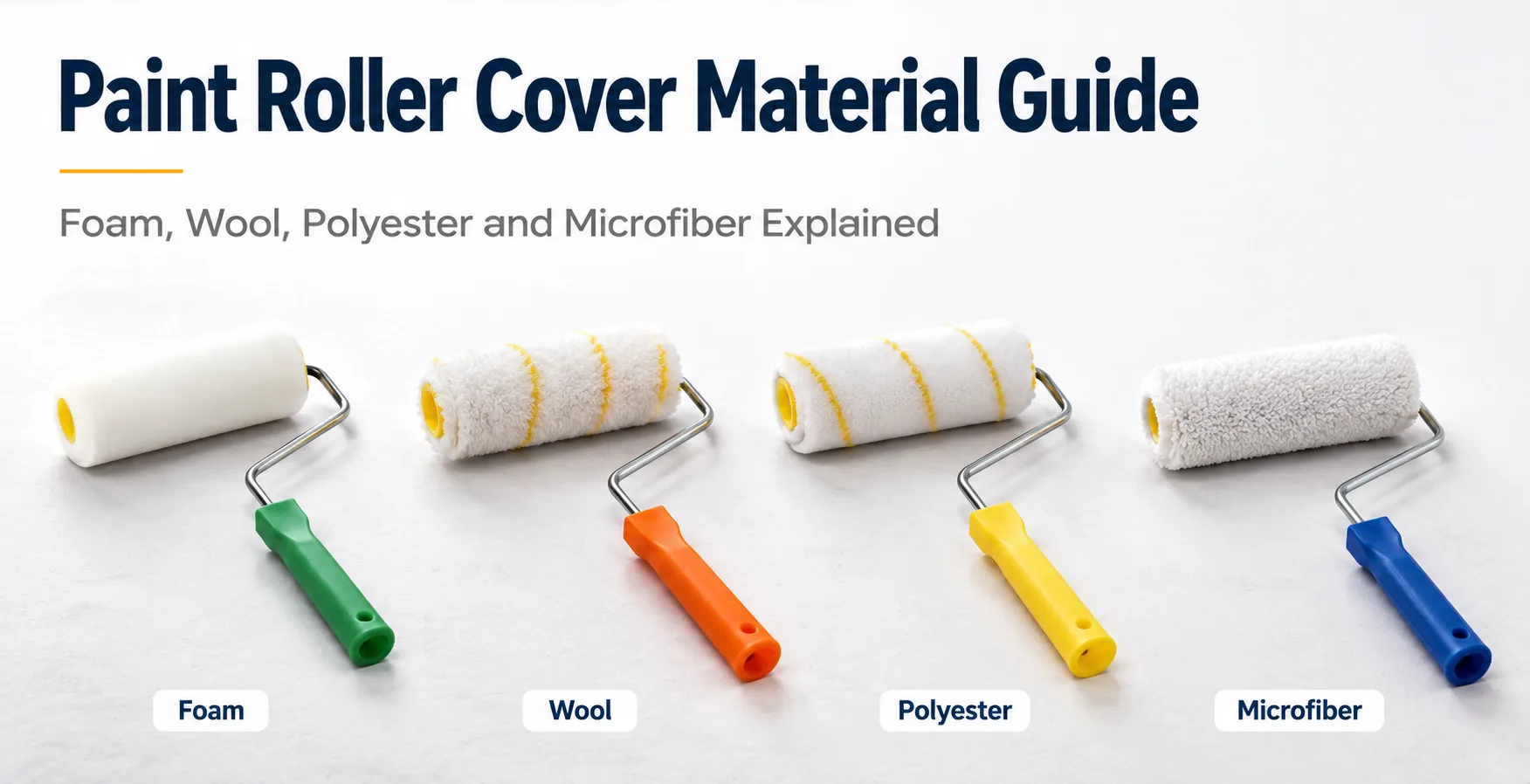
The best paint roller cover material depends on the surface, coating type, finish requirement, and working conditions. Foam roller covers are best for smooth surfaces and fine finishes. Wool roller covers are better for rough, porous, or exterior surfaces where high paint loading is needed. Polyester roller covers are practical for general wall painting and cost-effective bulk use. Microfiber roller covers offer strong paint pickup, smooth release, and efficient coverage for professional interior painting.
For contractors, distributors, wholesalers, and hardware retailers, choosing the right roller cover material is not only a product specification issue. It affects paint consumption, labor efficiency, finish quality, customer complaints, and repeat orders. A well-planned roller product line should include different materials for different painting scenarios rather than relying on one universal roller type.
Why Paint Roller Cover Material Matters
Many users compare paint rollers by size or nap length first, but the cover material often has an even greater impact on performance. Different materials absorb and release paint differently. They also vary in durability, lint resistance, surface compatibility, and cleaning difficulty.
A poor-quality roller cover may cause uneven coverage, fiber shedding, roller marks, splatter, bubbles, or premature wear. These problems can increase labor time and create the impression that the paint itself is low quality, even when the real issue is the roller cover.
When selecting roller cover materials, buyers should consider:
Surface type: Smooth walls, rough plaster, wood, metal, concrete, brick, and stucco require different roller materials.
Paint type: Water-based paint, oil-based paint, primer, varnish, stain, and masonry coating behave differently.
Finish expectation: Fine finish, standard wall finish, textured coverage, or heavy-duty exterior coating.
Work efficiency: Better paint pickup and release can reduce dipping frequency and improve productivity.
Durability and cost: The cheapest roller is not always the lowest-cost option over the full project.
Foam Roller Covers: Best for Smooth Surfaces and Fine Finishes
Foam roller covers are made from sponge-like foam material rather than woven or knitted fibers. They are commonly used on smooth surfaces where users want minimal texture and a clean coating appearance.
Best Applications for Foam Roller Covers
A foam roller cover can produce a smoother finish than many fabric rollers on flat surfaces. This makes it popular for furniture refinishing, cabinet painting, and small decorative projects where visible texture is not desired.
Advantages of Foam Roller Covers
Creates a smooth finish on properly prepared surfaces
No fiber shedding because there is no fabric pile
Good for small-area painting and touch-ups
Usually economical for disposable or light-duty use
Useful for thin coatings, stains, varnishes, and sealers
Limitations of Foam Roller Covers
Not suitable for rough or textured walls
Holds less paint than wool, polyester, or microfiber covers
May create bubbles if rolled too quickly
Can break down on abrasive surfaces
Not ideal for large wall painting where productivity matters
When Should Buyers Choose Foam Roller Covers?
Foam roller covers are a good choice for retailers and distributors serving DIY users, furniture painters, decorators, and touch-up markets. They are also useful as part of a mixed roller product line. However, they should be clearly positioned for smooth surfaces, not as a general solution for all wall painting projects.
Wool Roller Covers: High Paint Loading for Rough and Exterior Surfaces
Wool roller covers are known for strong paint pickup and release. Natural wool and wool-blend covers are often used on rough, porous, or textured surfaces where the roller needs to carry more paint and push coating into uneven areas.
Best Applications for Wool Roller Covers
Wool roller covers are especially valuable when working on surfaces that absorb paint quickly. The higher paint capacity helps reduce frequent reloading and improves coverage on uneven surfaces.
Advantages of Wool Roller Covers
Excellent paint holding capacity
Strong coverage on rough and porous surfaces
Efficient for exterior and masonry applications
Good choice for thicker coatings and primers
Suitable for professional and contractor-grade product lines
Limitations of Wool Roller Covers
Usually more expensive than basic synthetic roller covers
May leave too much texture on smooth interior surfaces
Requires proper cleaning and storage for repeated use
Low-quality wool covers may shed fibers
Can feel heavier when fully loaded with paint
When Should Buyers Choose Wool Roller Covers?
Wool roller covers are suitable for customers who value coverage, durability, and productivity more than the lowest unit price. They are especially appropriate for contractor supply channels, exterior painting projects, masonry coating, and markets where rough wall surfaces are common.
Polyester Roller Covers: Practical All-Purpose Choice for Wall Painting
Polyester roller covers are widely used for general house painting because they offer a good balance of performance, availability, and cost. They are commonly used with water-based wall paints, primers, ceilings, and standard interior surfaces.
Best Applications for Polyester Roller Covers
For many buyers, polyester roller covers are the core product category because they meet broad market demand. They can be produced in different nap lengths, densities, diameters, and packaging formats, making them suitable for both retail and wholesale channels.
Advantages of Polyester Roller Covers
Cost-effective for high-volume sales
Suitable for many water-based paints and primers
Good durability when fiber quality is reliable
Available in many sizes and nap lengths
Easy to position for general wall painting
Limitations of Polyester Roller Covers
Basic grades may have lower paint pickup than microfiber
Low-quality polyester covers may shed lint or flatten quickly
Not always ideal for ultra-smooth finishes
May not perform as well as wool on very rough surfaces
When Should Buyers Choose Polyester Roller Covers?
Polyester roller covers are suitable for buyers who need a practical, affordable, and widely accepted product for general painting. They are especially useful for hardware stores, paint shops, renovation supply businesses, and wholesalers serving standard residential painting demand.
Microfiber Roller Covers: Efficient Coverage and Smooth Paint Release
Microfiber roller covers use very fine synthetic fibers designed to improve paint pickup and controlled release. They are often selected for professional interior painting where smooth coverage, low lint, and efficient application are important.
Best Applications for Microfiber Roller Covers
Interior walls and ceilings
Smooth to medium-textured surfaces
Professional residential painting
Commercial interior projects
Water-based paints and primers
Projects requiring fewer roller marks
Microfiber covers can hold more paint than many basic polyester covers while releasing it more evenly. This helps painters maintain consistent coverage and reduce the number of passes needed.
Advantages of Microfiber Roller Covers
Excellent paint pickup and release
Helps improve coverage efficiency
Good finish quality on interior walls
Lower lint risk when manufactured properly
Suitable for professional and higher-value product lines
Limitations of Microfiber Roller Covers
Usually costs more than basic polyester covers
Quality varies significantly between manufacturers
Not always necessary for very rough exterior surfaces
Requires proper cleaning to maintain performance
When Should Buyers Choose Microfiber Roller Covers?
Microfiber roller covers are a strong choice for buyers targeting professional painters, premium DIY customers, and users who care about efficiency and finish quality. They are also useful for product lines positioned above basic polyester rollers but below highly specialized heavy-duty covers.
Foam vs Wool vs Polyester vs Microfiber Roller Covers
| Material | Best Surface | Best Coating Type | Main Advantage | Main Limitation |
|---|
| Foam | Smooth wood, cabinets, doors, metal panels | Varnish, stain, smooth coatings, some water-based paints | Smooth finish with no fiber shedding | Low paint capacity and poor rough-surface performance |
| Wool | Rough walls, masonry, brick, concrete, stucco | Primer, masonry paint, exterior coatings | High paint loading and strong surface coverage | Higher cost and more texture on smooth surfaces |
| Polyester | Standard walls, ceilings, drywall, light texture | Water-based paint, primer, general wall coatings | Cost-effective and versatile | Performance depends heavily on fiber quality |
| Microfiber | Smooth to medium interior walls and ceilings | Water-based paint, primer, professional interior coatings | Excellent pickup, smooth release, efficient coverage | Higher price than basic polyester rollers |
Which Roller Cover Material Gives the Smoothest Finish?
For very smooth surfaces such as cabinets, doors, and furniture panels, foam roller covers often give the smoothest appearance. For walls and ceilings, microfiber roller covers usually provide a better balance between smooth finish and efficient coverage.
The smoothness of the final result also depends on nap length, paint viscosity, surface preparation, pressure control, and rolling technique. Even a premium roller cover cannot fully correct a dusty surface, poor primer layer, or unsuitable paint consistency.
Which Roller Cover Holds the Most Paint?
Wool roller covers generally hold the most paint, especially in medium and long nap styles. This makes them valuable for rough walls, exterior coatings, masonry, and large-area projects. Microfiber covers also offer strong paint pickup, especially for interior wall painting, but they are usually selected for balanced coverage and finish rather than maximum paint loading alone.
Foam covers hold the least paint among these four common materials. Polyester covers vary widely depending on fiber density, nap length, and manufacturing quality.
Which Roller Cover Is Best for Water-Based Paint?
Polyester and microfiber roller covers are usually the most practical choices for water-based paints. Polyester covers provide strong cost performance for general painting. Microfiber covers are better when users want higher paint pickup, smoother release, and more efficient coverage.
Foam roller covers can also work with some water-based coatings on smooth surfaces, but they are not ideal for large walls. Wool roller covers may be used with water-based masonry paints or primers on rough surfaces.
Commercial Buying Considerations for Roller Cover Materials
Lint and Fiber Shedding
Lint control is one of the most important quality indicators. Loose fibers can remain in the paint film and damage the final surface. This is especially serious for smooth interior walls, doors, cabinets, and decorative finishes.
Paint Pickup and Release
A good roller cover should absorb enough paint and release it evenly. Poor release causes patchy coverage, while excessive release may cause dripping and splatter. Buyers should evaluate both paint loading and release consistency.
Core Strength
The roller core must remain stable after absorbing paint. Weak cores can soften, deform, or separate from the cover material, especially during long painting jobs or when used with heavier coatings.
Nap Recovery
Quality roller covers should recover after pressure. If the fiber pile flattens quickly, the roller may create streaks, marks, or uneven coating thickness.
Packaging and Product Positioning
Clear packaging should explain the best surface and paint type for each roller material. For example, foam can be labeled for smooth finishes, wool for rough exterior surfaces, polyester for general walls, and microfiber for professional interior painting.
Recommended Roller Cover Product Line for Buyers
For wholesalers, distributors, and paint tool brands, a complete roller cover range should include materials for different use cases rather than only one low-cost option.
Basic Retail Range
Foam roller covers for smooth surfaces and touch-ups
Polyester roller covers for general wall painting
Microfiber roller covers for better finish and higher efficiency
Selected wool roller covers for rough and exterior surfaces
Professional Contractor Range
High-density microfiber covers for interior projects
Wool or wool-blend covers for masonry and exterior walls
Durable polyester covers for cost-effective daily use
Multiple nap lengths for smooth, medium, and rough surfaces
Common Mistakes When Choosing Roller Cover Material
Using Foam Rollers on Rough Walls
Foam roller covers are not designed for rough surfaces. They may break down quickly and fail to push paint into uneven areas. For rough walls, wool or thicker synthetic covers are more suitable.
Using Wool Rollers for Fine Cabinet Finishes
Wool covers hold a lot of paint, but they can leave too much texture on smooth surfaces. For cabinets, furniture, and smooth panels, foam or suitable short-nap microfiber covers are usually better.
Choosing Polyester Without Checking Quality
Polyester roller covers are common, but quality varies. Low-density fibers, weak bonding, and poor cores can cause lint, uneven coating, and short service life.
Assuming Microfiber Is Always the Best Choice
Microfiber is excellent for many interior jobs, but it is not always necessary for rough exterior walls or disposable low-cost applications. The material should match the project and customer segment.
FAQ: Paint Roller Cover Materials
What is the best roller cover material for walls?
For standard interior walls, polyester and microfiber roller covers are usually the best choices. Polyester is cost-effective for general painting, while microfiber provides better paint pickup and smoother release for professional results.
What roller cover material is best for rough surfaces?
Wool roller covers are often best for rough surfaces such as brick, concrete, stucco, and textured exterior walls. Their high paint loading capacity helps cover uneven surfaces more effectively.
Are foam roller covers good for painting?
Foam roller covers are good for smooth surfaces, furniture, cabinets, doors, and touch-ups. They are not ideal for rough walls or large-area painting because they hold less paint and wear faster on abrasive surfaces.
Is microfiber better than polyester?
Microfiber usually offers better paint pickup and smoother release than basic polyester. However, polyester is often more cost-effective for general painting. The better choice depends on budget, finish requirement, and user expectations.
Which roller cover material should wholesalers stock first?
Wholesalers should usually stock polyester roller covers for high-volume general demand, microfiber covers for professional interior painting, foam covers for smooth finish applications, and wool covers for rough or exterior surfaces.
Final Recommendation
Foam, wool, polyester, and microfiber roller covers each serve a different purpose. Foam is best for smooth finishes, wool is best for rough and exterior surfaces, polyester is a practical all-purpose material, and microfiber offers higher efficiency and smoother paint release for professional interior work.
For commercial buyers, the strongest strategy is to build a roller cover range around real application scenarios. Clear product positioning helps customers choose the correct roller faster, reduces misuse, improves painting results, and supports stronger repeat purchasing in the painting and decorating tools market.
 English