Danyang Pengyu Tools Co., Ltd.

Putty Knife vs Scraper: Key Differences

Table of Content [Hide]

    The paint tools industry offers myriad options for both amateur DIY enthusiasts and professional contractors. Among these tools, putty knives and scrapers play pivotal roles in preparing surfaces for paint brushes and rollers applications, managing drywall repairs, and achieving smooth finishes. While both tools serve similar purposes, they are characterized by distinct design features and functionality, offering unique benefits depending on the project requirements. This article will guide you through the nuances of putty knife vs scraper, providing clarity on their design and build comparison, usage scenarios, material durability, cost-effectiveness, as well as their respective pros and cons. Whether you're selecting tools for home improvement or professional use, understanding these differences is crucial for optimal task execution.


    Design and Build Comparison


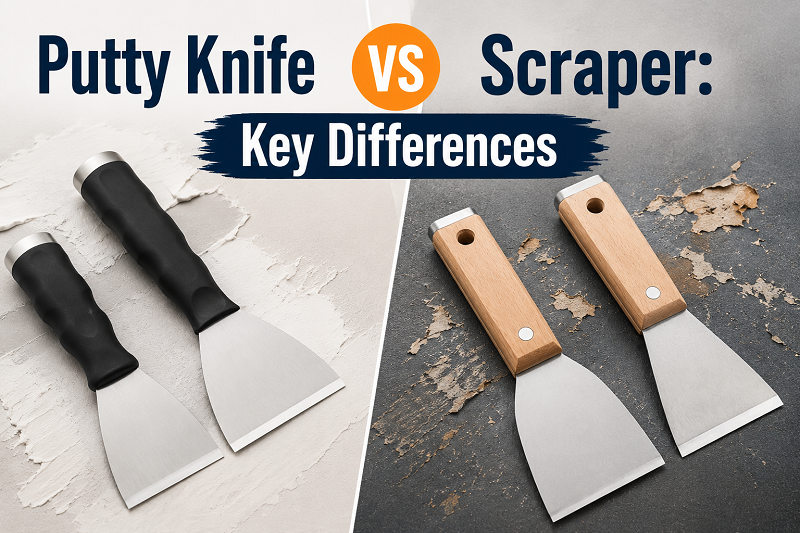
    A significant distinction between a putty knife and a scraper stems from their design and build. Putty knives often feature a flat and flexible blade, ideal for spreading materials smoothly. They're particularly useful when dealing with spackle putty knife applications, where spreading is essential for even coverage. In contrast, scrapers generally have a harder, more rigid blade designed to remove materials rather than spread them. This distinction is crucial for tasks such as using a paint scraper to remove old or chipped paint from surfaces.


    ToolDesign FeatureTypical Use
    Putty KnifeFlexible bladeSpreading putty, drywall applications
    ScraperRigid bladeRemoving paint and debris

    In scenarios involving delicate surfaces, opting for a plastic putty knife offers benefits like minimizing damage, thanks to its non-metallic build, which is evident in its usage for applying wood stain brush finishes.


    Usage Scenarios


    Understanding when to use each tool is foundational in the art brushes for oil painting and larger construction projects. Putty knives excel in tasks requiring gentle application of compounds and adhesives, making them indispensable in drywall finishing and applying materials like wood fillers. Conversely, scrapers are adept at clearing surfaces. When tackling a floor scrub brush project, for instance, employing a scraper putty knife can effectively strip unwanted layers without compromising the underlying surface.


    For paint tools maintenance, a brush cleaning brush is crucial for prolonging tool lifespan, especially when dealing with brushes used alongside paint tray plastic or metal paint tray setups.


    Material Durability


    The material composition of a tool dictates its durability and longevity. Putty knives often feature blades made of stainless steel or plastic, balancing flexibility with strength. Stainless steel putty knife options offer advantageous durability, extending functionality across repetitive use without significant wear. Meanwhile, scrapers can incorporate metallic elements that withstand high impact, maintaining effectiveness in challenging removal tasks.


    When selecting a commercial hot glue gun, similarly, understanding the material durability is essential to ensure tool longevity under regular usage.


    Cost Effectiveness


    Cost-effectiveness is a key consideration for professional builders and casual DIYers alike. The price range of putty knives varies widely, influenced by material and brand quality. Plastic putty knife versions provide cost-efficient solutions for light home projects. For heavy-duty applications, investing in a durable metal paint scraper could offer more robust performance and longer lifespan.


    Such thoughtful investments are mirrored when choosing a cordless glue gun or any automotive cleaning brushes, aligning financial considerations with performance demands.


    Pros and Cons


    Examining the benefits and drawbacks associated with putty knives and scrapers reveals insights that aid in informed decision-making:


    ToolProsCons
    Putty KnifeEven spread, minimizes surface damageLess effective in material removal
    ScraperHighly effective in removing materialsMay cause surface damage if misused

    Alternative tools, such as a foam brush for polyurethane or drywall putty knife, provide specific advantages suited to specialized tasks.


    Conclusion


    Navigating the tool landscape requires a nuanced understanding of each tool's strengths, weaknesses, and appropriate applications. This knowledge empowers you to choose wisely, balancing functionality against personal project demands whether you're considering a paint tray metal setup or tackling intricate roller frame installations. Both putty knives and scrapers have their unique roles in floor scrub brush projects or delicate nylon paint brush tasks. By understanding the design, usage scenarios, material choices, cost factors, and pros and cons, you can ensure successful outcomes in your endeavors. Arm yourself with informed choices to enhance efficiency, reliability, and satisfaction in your projects, guided by this comprehensive exploration of putty knife vs scraper.

    References
    PENGYU
    We use cookies to offer you a better browsing experience, analyze site traffic and personalize content. Part of the tracking is necessary to ensure SEO effectiveness,
    By using this site, you agree to our use of cookies. Visit our cookie policy to learn more.
    Reject Accept