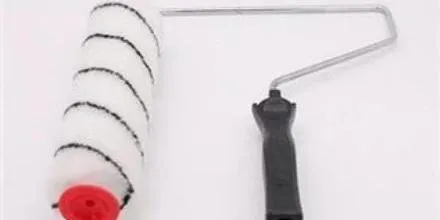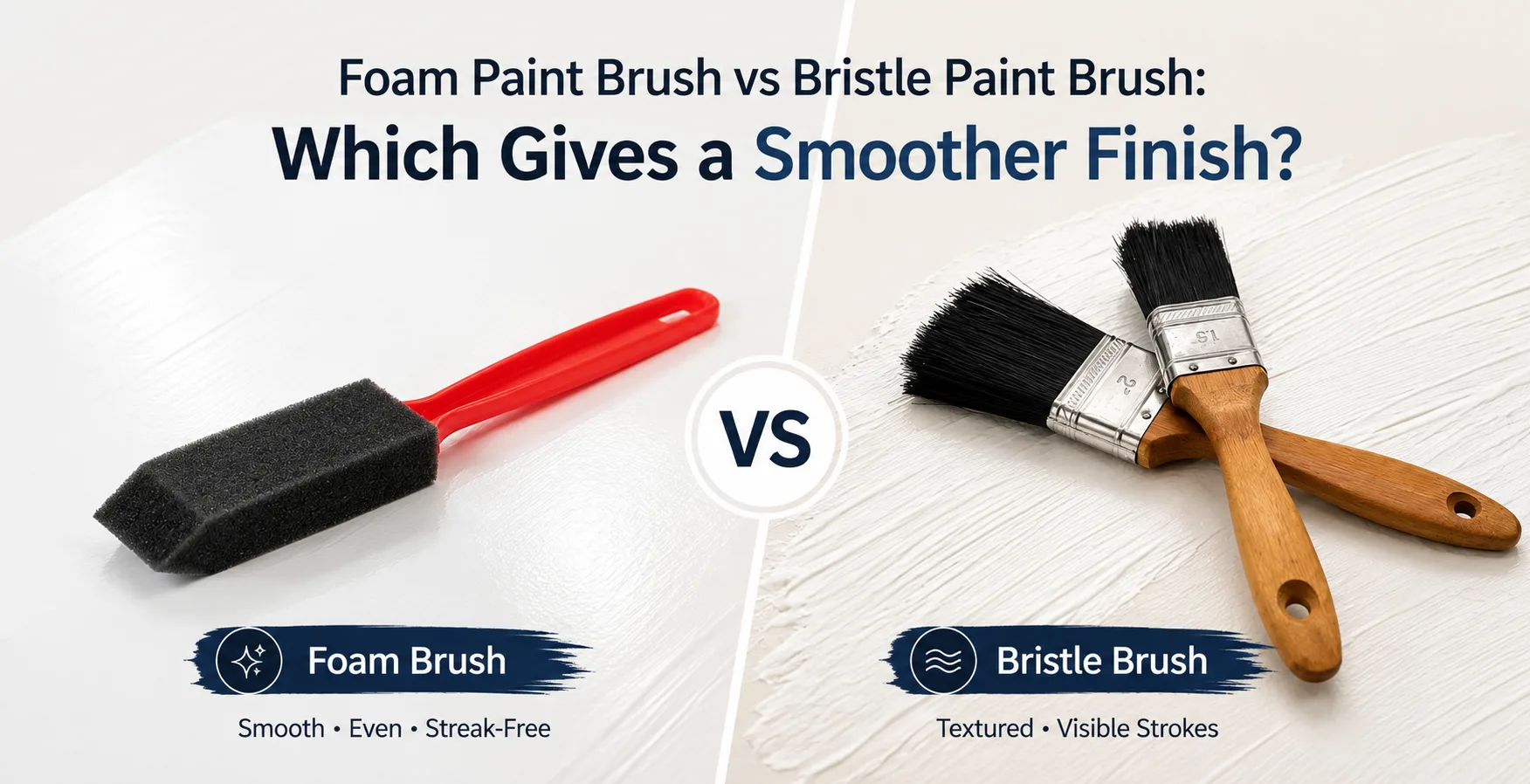
A Foam Paint Brush usually gives a smoother finish on small, flat, and properly prepared surfaces such as cabinets, furniture panels, doors, trim samples, and craft projects. A bristle paint brush, especially a high-quality Natural Bristle Paint Brush, can give a smoother and more professional finish with oil-based paints, varnishes, stains, and wood finishes when used correctly.
For smoothness alone, foam brushes are useful for light-duty coating and touch-up work. For durability, control, paint holding, and professional finishing, bristle brushes are often the better long-term choice. The right option depends on the coating type, surface size, required finish quality, user skill level, and whether the brush is intended for one-time or repeated use.
Foam Paint Brush vs Bristle Paint Brush: Main Difference
The main difference is the applicator material. A Foam Paint Brush uses a sponge-like foam head, while a bristle paint brush uses natural bristles, synthetic filaments, or blended bristles. Foam spreads coating with a soft, flat surface. Bristle brushes carry paint between fibers and release it through controlled strokes.
| Feature | Foam Paint Brush | Bristle Paint Brush |
|---|
| Best Finish Type | Smooth finish on small flat surfaces | Controlled professional finish on larger or detailed surfaces |
| Best Coatings | Stains, varnishes, sealers, touch-up paint, craft coatings | Water-based paint, oil-based paint, varnish, stain, primer |
| Paint Holding Capacity | Low to moderate | Moderate to high depending on bristle quality |
| Durability | Usually low, often disposable | Higher, especially professional-grade brushes |
| Best Surface | Small smooth surfaces | Trim, doors, furniture, walls, woodwork, detailed areas |
| Commercial Positioning | Low-cost, disposable, DIY, craft, touch-up use | General painting, professional decorating, finishing work |
What Is a Foam Paint Brush?
A Foam Paint Brush is made with a foam applicator attached to a plastic or wooden handle. Instead of individual bristles, the foam head absorbs coating and spreads it across the surface. Foam brushes are commonly used for small painting tasks, staining, varnishing, sealing, craft work, touch-ups, and sample applications.
Foam brushes are popular because they are inexpensive, lightweight, easy to use, and often disposable. They are especially attractive for DIY users who do not want to clean brushes after using stains, varnishes, or small quantities of paint.
Best Applications for Foam Paint Brushes
Small furniture touch-ups
Cabinet sample painting
Wood staining
Varnish and sealer application
Craft projects
Paint testing on small surfaces
Disposable one-time coating work
Advantages of Foam Paint Brushes
Smooth application on flat surfaces: Foam can leave minimal brush texture when used correctly.
No bristle shedding: Since there are no fibers, users do not need to worry about loose bristles in the finish.
Low cost: Foam brushes are economical for short-term or disposable use.
Easy for beginners: The soft foam head is simple to control on small surfaces.
Good for stains and sealers: Foam can spread thin coatings evenly over small areas.
Limitations of Foam Paint Brushes
Lower paint holding capacity than quality bristle brushes
Not suitable for large wall painting or rough surfaces
May create bubbles if pressed too hard or moved too quickly
Foam can tear or deform during use
Not ideal for repeated professional painting projects
What Is a Bristle Paint Brush?
A bristle paint brush uses natural bristles, synthetic filaments, or blended fibers to hold and release paint. Bristle brushes are available in many shapes, including flat brushes, angled brushes, wall brushes, round brushes, and detail brushes. They are widely used in house painting, furniture finishing, trim painting, wall edges, doors, cabinets, fences, and decorative work.
A Natural Bristle Paint Brush is especially valued for oil-based paints, varnishes, stains, and traditional wood finishes. Synthetic bristle brushes are usually better for water-based paints, latex paints, acrylics, primers, and modern wall coatings.
Best Applications for Bristle Paint Brushes
Interior and exterior trim painting
Doors, frames, and baseboards
Furniture and wood finishing
Cabinets and decorative panels
Wall edges and cutting-in
Oil-based coatings, stains, and varnishes
Professional and repeated painting work
Advantages of Bristle Paint Brushes
Better paint holding: Quality bristles hold more paint and reduce frequent dipping.
Greater control: Bristles allow painters to guide paint into edges, corners, and details.
More durable: Professional-grade brushes can be cleaned and reused many times.
More size and shape options: Bristle brushes can be designed for different surfaces and tasks.
Professional finish potential: A good bristle brush can produce excellent results when matched with the right coating.
Limitations of Bristle Paint Brushes
Low-quality brushes may shed bristles
Brush marks may appear if the wrong brush or technique is used
Requires cleaning and proper storage after use
Better brushes cost more than disposable foam brushes
Natural bristles are not ideal for water-based paints
Which Brush Gives a Smoother Finish?
A Foam Paint Brush can give a very smooth finish on small flat surfaces because it does not have individual bristles that leave brush lines. This makes it useful for thin coatings, sealers, varnishes, stains, and small touch-up projects.
However, for larger surfaces, thicker coatings, detailed edges, and professional finishing, a high-quality bristle brush often gives better results. A Natural Bristle Paint Brush can produce a smooth, rich finish with oil-based coatings and varnishes because the bristles hold and release the coating evenly.
In practical terms, foam may look smoother on a small test panel, while a quality bristle brush is usually more reliable for complete painting jobs where control, coating thickness, and durability matter.
Foam Paint Brush for Smooth Finishes: When It Works Well
Small Flat Surfaces
Foam brushes perform well on small, smooth, flat surfaces. Examples include sample boards, cabinet test areas, craft panels, shelves, and small decorative pieces. Because the foam head is soft and uniform, it can apply coating with minimal visible brush texture.
Thin Coatings
Foam brushes work well with many thin coatings, including stains, sealers, varnishes, and some water-based decorative paints. These coatings flow easily across the surface and do not require the same paint loading capacity as thicker wall paints.
Disposable Use
For projects involving difficult-to-clean coatings, foam brushes can be practical because users can dispose of them after use. This is attractive for DIY users and small repair jobs.
Sample Testing
Foam brushes are useful for testing paint colors, stains, or varnishes before a full project. They are inexpensive and allow users to apply coating without opening or cleaning a professional brush.
When Foam Paint Brushes May Not Give a Good Finish
Large Surfaces
Foam brushes usually do not hold enough paint for large surfaces. Users may need to reload frequently, which can create lap marks and uneven coverage. For walls, doors, and large panels, a roller or quality bristle brush is often more efficient.
Rough or Textured Surfaces
Foam does not work well on rough wood, masonry, textured walls, or abrasive surfaces. The foam may tear, drag, or fail to push coating into uneven areas. Bristle brushes are more suitable for these conditions.
Fast Rolling or Heavy Pressure
Foam can create bubbles if users move too quickly or press too hard. This is a common issue with varnish, sealer, and some glossy coatings. Light pressure and controlled movement are necessary.
Thick Paints
Foam brushes may struggle with thick paints because they do not release heavy coatings as smoothly as quality bristles. This can cause dragging, uneven film thickness, or visible marks.
Natural Bristle Paint Brush for Smooth Finishing
A Natural Bristle Paint Brush is often preferred for oil-based paints, wood stains, varnishes, polyurethane, shellac, and solvent-based coatings. Natural bristles have a structure that helps hold and release these coatings smoothly, making them suitable for fine finishing work.
Best Uses for Natural Bristle Brushes
Wood staining
Oil-based paint application
Varnish and clear coating
Furniture finishing
Cabinet and door finishing
Decorative trim and restoration work
Why Natural Bristles Can Create a Smooth Finish
Natural bristles are flexible and can hold oil-based coatings well. When used properly, they release the coating in a controlled way and help the finish level smoothly. This is why many woodworkers and decorators still prefer natural bristle brushes for traditional finishing applications.
When Natural Bristle Brushes Are Not Suitable
Natural bristles are not recommended for water-based paints because they can absorb water, swell, and lose stiffness. This reduces control and can create brush marks. For latex paint, acrylic paint, or water-based primer, a synthetic bristle brush is usually a better choice.
Foam Paint Brush vs Natural Bristle Paint Brush for Different Coatings
| Coating Type | Better Choice | Reason |
|---|
| Wood stain | Foam Paint Brush or Natural Bristle Paint Brush | Foam works for simple staining; natural bristle offers better control on quality woodwork |
| Oil-based paint | Natural Bristle Paint Brush | Natural bristles hold and release oil-based coatings smoothly |
| Water-based paint | Synthetic bristle brush or foam for small areas | Natural bristles may absorb water and lose shape |
| Varnish | Natural Bristle Paint Brush | Better control and smoother release for professional finishing |
| Sealer | Foam Paint Brush | Good for thin coatings and small smooth surfaces |
| Primer | Bristle brush | Better paint loading and durability for larger areas |
Foam Brush vs Bristle Brush for Cabinets
For cabinet painting, the better choice depends on the coating and finish expectation. A Foam Paint Brush may work for small cabinet samples, touch-ups, or thin coatings, but it is not always ideal for painting an entire cabinet set. Foam can leave bubbles or uneven coverage if the paint is too thick or the surface area is large.
For cabinet frames, edges, corners, and detailed sections, a high-quality bristle brush usually provides better control. For oil-based cabinet finishes, a Natural Bristle Paint Brush can be an excellent choice. For water-based cabinet paint, a high-quality synthetic brush is usually more suitable.
Foam Brush vs Bristle Brush for Furniture
Foam brushes are useful for small furniture staining, touch-ups, and simple clear coatings. They are inexpensive and convenient for occasional users. However, for furniture restoration, visible wood grain, detailed edges, and higher-value finishes, bristle brushes usually provide better control.
A Natural Bristle Paint Brush is especially suitable for oil-based stains and varnishes on wooden furniture. It can help distribute the coating smoothly while giving the user more control around corners, grooves, and shaped details.
Foam Brush vs Bristle Brush for Walls and Trim
For walls and trim, bristle brushes are usually the better choice. Foam brushes do not hold enough paint for efficient wall painting and may wear quickly on textured areas. Bristle brushes offer better control, higher paint capacity, and more size options.
For trim, skirting boards, door frames, and window frames, angled bristle brushes are especially useful because they can create cleaner lines. Foam brushes may be used for minor touch-ups but should not replace a proper trim brush for professional work.
Durability and Cost Comparison
Foam brushes are usually cheaper per piece, but they are often disposable. Bristle brushes cost more initially, but professional-grade brushes can be cleaned and reused many times. For one-time use, foam may be economical. For repeated painting, bristle brushes usually offer better long-term value.
| Cost Factor | Foam Paint Brush | Bristle Paint Brush |
|---|
| Initial Cost | Low | Medium to high depending on quality |
| Reuse Potential | Low | High if cleaned properly |
| Durability | Limited | Better for repeated use |
| Best Buyer Type | DIY, craft, touch-up, disposable use | Professional painters, decorators, serious DIY users |
| Long-Term Value | Good for small one-time jobs | Better for repeated and professional work |
How to Avoid Brush Marks with Either Brush Type
Prepare the Surface Properly
A smooth finish starts before painting. Sand rough spots, remove dust, clean grease, and use primer when needed. Foam and bristle brushes both perform poorly on dirty or uneven surfaces.
Choose the Right Coating Consistency
Paint that is too thick may drag and leave marks. Coating that is too thin may run or drip. Follow the coating manufacturer’s guidance and avoid over-thinning unless the product allows it.
Use Light, Even Pressure
Pressing too hard can create bubbles with foam brushes and streaks with bristle brushes. Smooth, controlled pressure helps create a more even coating film.
Avoid Over-Brushing
Once paint or varnish starts to set, brushing over it repeatedly can create marks. Apply the coating evenly and allow it to level naturally.
Match the Brush to the Paint Type
Use natural bristle brushes for oil-based coatings and suitable synthetic brushes for water-based coatings. Use foam brushes mainly for small smooth surfaces, stains, sealers, and touch-ups.
Commercial Buying Considerations
Target User Group
Foam brushes are suitable for DIY users, craft users, home repair customers, and buyers who need economical disposable tools. Bristle brushes are better for decorators, contractors, furniture finishers, and customers who expect repeated use.
Packaging Strategy
Foam brushes can be sold in multi-piece packs because users often treat them as disposable. Bristle brushes can be sold by size, shape, bristle material, and application type, such as trim brush, flat brush, angled brush, wall brush, or natural bristle finishing brush.
Quality Control
For foam brushes, buyers should check foam density, bonding strength, handle stability, and resistance to tearing. For bristle brushes, buyers should check bristle shedding, ferrule strength, paint pickup, shape recovery, and handle comfort.
Product Line Planning
A strong paint tools range should not choose only foam or bristle brushes. Foam brushes satisfy low-cost and disposable demand, while bristle brushes cover general painting and professional finishing demand. Offering both improves product coverage and customer satisfaction.
Common Mistakes When Choosing Foam or Bristle Brushes
Using Foam Brushes for Large Wall Painting
Foam brushes are not efficient for large walls. They hold less paint and can create uneven coverage. A roller, wall brush, or suitable bristle brush is better for this type of work.
Using Natural Bristle Brushes with Water-Based Paint
A Natural Bristle Paint Brush can absorb water and lose stiffness when used with latex or acrylic paint. This may cause poor control and visible brush marks. Synthetic bristles are usually better for water-based paint.
Assuming Foam Always Gives the Best Finish
Foam can look smooth on small surfaces, but it may create bubbles or uneven film on larger projects. Smoothness depends on coating type, surface preparation, and application technique.
Buying Low-Quality Bristle Brushes for Fine Finishing
Low-quality bristle brushes may shed, spread unevenly, or leave marks. For varnish, stain, and visible woodwork, brush quality is especially important.
FAQ: Foam Paint Brush vs Bristle Paint Brush
Does a Foam Paint Brush leave a smoother finish?
A Foam Paint Brush can leave a smoother finish on small, flat, smooth surfaces. However, it may create bubbles or uneven coverage on larger areas or with thick coatings.
Is a Natural Bristle Paint Brush better for varnish?
Yes. A Natural Bristle Paint Brush is often a strong choice for varnish, oil-based coatings, stains, and traditional wood finishing because it holds and releases these coatings smoothly.
Can foam brushes be used with oil-based paint?
Some foam brushes can be used with oil-based coatings, but compatibility depends on the foam material and solvent strength. For professional oil-based finishing, a Natural Bristle Paint Brush is often more reliable.
Are foam brushes good for painting cabinets?
Foam brushes can be useful for cabinet touch-ups, samples, and small smooth areas. For full cabinet painting, a high-quality bristle brush or suitable roller usually provides better control and consistency.
Which brush is better for wood stain?
Both foam brushes and natural bristle brushes can work for wood stain. Foam brushes are convenient for simple staining, while natural bristle brushes usually offer better control for furniture, trim, and higher-quality wood finishing.
Should wholesalers stock both foam and bristle brushes?
Yes. Foam brushes serve low-cost, disposable, touch-up, and craft markets. Bristle brushes serve general painting, professional decorating, and finishing applications. Stocking both helps cover wider customer demand.
Final Recommendation
Choose a Foam Paint Brush for small, smooth surfaces, touch-ups, stains, sealers, craft projects, and disposable use. Choose a bristle paint brush when the project requires better paint holding, edge control, durability, and professional finish quality. For oil-based paints, varnishes, and wood stains, a Natural Bristle Paint Brush is often the better finishing tool.
For commercial buyers, the best product strategy is to offer foam brushes as economical convenience tools and bristle brushes as core painting and finishing tools. Clear application guidance helps customers choose correctly, improves painting results, and supports stronger repeat purchasing in the house painting and decorating supplies market.
 English