Natural bristle paint brushes remain the preferred choice for oil-based paints, stains, varnishes, and wood finishing applications, while synthetic paint brushes generally deliver superior performance with water-based paints, acrylics, latex coatings, and modern architectural coatings. The better option depends on the coating being applied, environmental conditions, finish requirements, and project budget rather than one brush being universally superior.
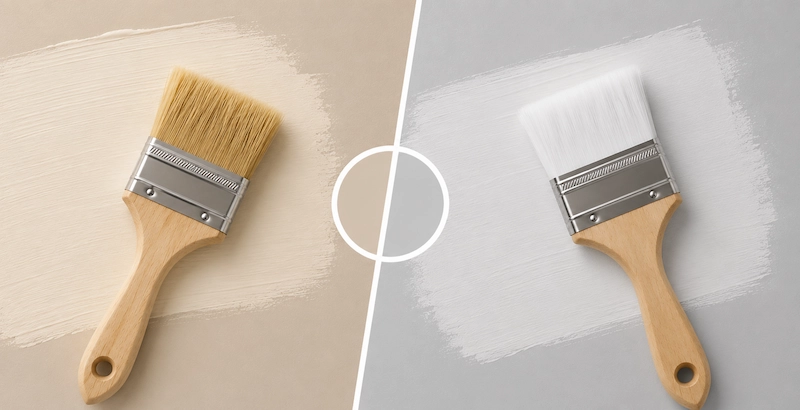
A natural bristle paint brush uses animal hair, typically sourced from hog bristles, which possess naturally split ends known as flags. These flags help hold and release paint smoothly, making natural bristles highly effective for achieving premium finishes with solvent-based coatings.
Excellent paint pickup and release
Smooth finish with oil-based coatings
Superior leveling characteristics
Ideal for varnishes and wood stains
Natural flexibility and responsiveness
Absorb water and swell when used with water-based paints
Can lose shape after prolonged exposure to moisture
Generally more expensive than standard synthetic alternatives
Less suitable for modern acrylic coatings
A synthetic paint brush utilizes engineered filaments such as nylon, polyester, or nylon-polyester blends. These materials are specifically designed to maintain stiffness, shape retention, and durability when used with water-based coatings.
As water-based paints continue to dominate residential and commercial painting markets worldwide, synthetic brushes have become the preferred choice for most professional contractors.
Excellent compatibility with latex and acrylic paints
Superior moisture resistance
Consistent performance in humid environments
Long service life
Easier cleaning and maintenance
May not deliver the same finish quality as natural bristles with oil-based coatings
Lower-end synthetic filaments can leave brush marks
Performance varies significantly between manufacturers
| Factor | Natural Bristle Paint Brush | Synthetic Paint Brush |
|---|---|---|
| Best Paint Type | Oil-Based Paints | Water-Based Paints |
| Moisture Resistance | Low | High |
| Shape Retention | Moderate | Excellent |
| Finish Quality | Excellent for Varnishes | Excellent for Latex Paints |
| Durability | Good | Very Good |
| Maintenance | More Demanding | Easier |
Professional painting contractors typically use both brush types depending on project requirements.
Natural bristle paint brush for wood finishing, cabinetry, furniture, stains, and varnishes.
Synthetic paint brush for walls, ceilings, drywall, exterior coatings, and most architectural paints.
Many contractors now purchase both brush categories to maximize versatility across multiple project types.
In modern painting environments dominated by water-based coatings, synthetic paint brushes generally offer longer service life. High-quality synthetic filaments resist moisture damage, maintain filament stiffness, and recover shape more effectively after repeated cleaning cycles.
Natural bristle brushes can last for years when used exclusively with oil-based products and maintained properly.
For distributors, retailers, and importers, purchase decisions should consider lifecycle cost rather than initial purchase price.
Although premium natural bristle paint brushes often carry higher unit costs, they remain popular in specialty finishing markets. Synthetic paint brushes usually provide broader market demand and higher sales volume because they are compatible with today's most commonly used coatings.
Choose natural bristle paint brush products if your customers frequently use oil-based coatings, wood stains, or furniture finishes.
Choose synthetic paint brush products if your target customers primarily use latex, acrylic, and water-based paints.
Offer both categories to maximize product coverage and customer satisfaction.
They can, but performance is usually poor because natural bristles absorb water and lose their shape.
Modern architectural coatings are primarily water-based, making synthetic brushes the most practical and durable option.
For varnishes, stains, and fine woodworking finishes, many professionals believe the finish quality justifies the additional investment.
A high-quality synthetic paint brush is generally considered the most versatile choice for modern painting applications.
Natural bristle paint brushes continue to excel in traditional finishing applications involving oil-based products, while synthetic paint brushes dominate modern construction and decorating projects due to their compatibility with water-based coatings. For distributors and contractors, maintaining a balanced product portfolio that includes both options is often the most effective strategy for serving diverse customer requirements.