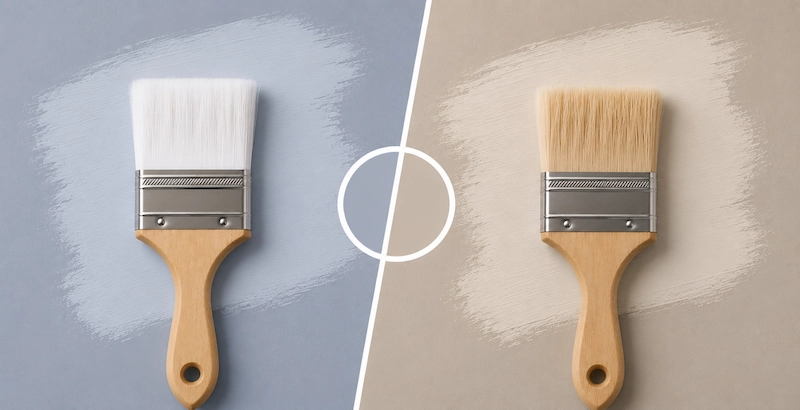
Nylon paint brushes generally provide a smoother finish, greater flexibility, and superior paint release, making them ideal for premium interior painting and fine finishing work. Polyester brushes offer better stiffness, durability, and resistance to heat and humidity, making them a preferred choice for exterior projects and demanding jobsite conditions. For many professional painters and distributors, a nylon polyester paint brush combines the advantages of both materials and has become the most versatile option in today's market.
Why Brush Filament Material Matters
Many buyers focus on brush size, handle style, or price when selecting paint brushes. However, filament material has a greater impact on painting performance than almost any other component.
The type of filament affects:
Understanding the differences between nylon and polyester helps contractors, distributors, and retailers choose the right products for their customers.
A nylon paint brush uses synthetic nylon filaments designed to provide flexibility and excellent paint flow. Nylon fibers are softer than polyester and often deliver smoother finishes, particularly with water-based paints.
Advantages of Nylon Paint Brushes
Excellent paint pickup and release
Smooth and uniform finish
High flexibility for precision work
Reduced brush marks
Excellent cutting-in performance
Comfortable control during detailed painting
Limitations of Nylon Paint Brushes
Can become too soft in extremely hot conditions
May absorb some moisture in humid environments
Less stiffness for heavy-bodied coatings
Generally higher manufacturing costs for premium-grade nylon
What Is a Polyester Paint Brush?
A polyester paint brush uses engineered polyester filaments that are naturally stiffer and more durable than nylon. Polyester maintains its shape well under demanding conditions and is widely used in professional construction and exterior painting projects.
Advantages of Polyester Paint Brushes
Excellent stiffness and control
Strong shape retention
Outstanding durability
Performs well in heat and humidity
Suitable for rough surfaces
Good resistance to wear
Limitations of Polyester Paint Brushes
May leave more visible brush marks
Less flexible than nylon
Can feel rigid during detailed work
Not always ideal for ultra-smooth finishes
Nylon vs Polyester Paint Brush: Side-by-Side Comparison
| Feature | Nylon Paint Brush | Polyester Paint Brush |
|---|
| Flexibility | Excellent | Moderate |
| Stiffness | Moderate | High |
| Finish Smoothness | Excellent | Good |
| Shape Retention | Good | Excellent |
| Heat Resistance | Moderate | Excellent |
| Humidity Resistance | Good | Excellent |
| Exterior Applications | Good | Excellent |
| Fine Finish Work | Excellent | Good |
A nylon polyester paint brush combines nylon and polyester filaments in a carefully engineered blend. This design aims to balance flexibility, paint release, durability, and shape retention.
Today, many professional-grade paint brushes use blended filaments because they perform well across a wider range of applications than either material alone.
Benefits of Nylon Polyester Paint Brushes
Smooth paint application
Improved durability
Balanced stiffness and flexibility
Suitable for interior and exterior projects
Compatible with most water-based coatings
Excellent all-purpose performance
Which Brush Is Better for Water-Based Paint?
Both nylon and polyester brushes work well with water-based coatings, but the ideal choice depends on the project.
Choose nylon for premium interior finishes, trim work, and detailed painting.
Choose polyester for exterior surfaces, rough substrates, and challenging weather conditions.
Choose a nylon polyester paint brush when versatility is the priority.
Which Brush Is Better for Exterior Painting?
Polyester brushes generally outperform nylon brushes outdoors because they maintain stiffness and shape in high temperatures and humid conditions.
Exterior painting often involves rougher surfaces and thicker coatings, making polyester's durability particularly valuable.
Which Brush Produces the Smoothest Finish?
For ultra-smooth finishes on cabinets, doors, furniture, and trim, nylon paint brushes typically provide superior results. Their flexibility allows paint to flow more evenly and minimizes visible brush marks.
This is one reason many professional painters continue to prefer nylon for premium finishing work.
How Do Professional Painters Choose Between Nylon and Polyester?
Professional contractors typically select brushes based on project requirements rather than choosing one material exclusively.
Interior walls and trim: Nylon or nylon polyester.
Cabinetry and fine finishes: Nylon.
Exterior siding and fences: Polyester.
General-purpose contracting work: Nylon polyester paint brush.
This approach maximizes efficiency and finish quality across different applications.
What Should Wholesale Buyers Consider?
Distributors and retailers should evaluate local market demand before building product inventories.
Key considerations include:
Regional climate conditions
Popular coating types
Professional contractor preferences
Retail price positioning
Expected durability requirements
Many wholesalers find that nylon polyester paint brush products generate the broadest customer appeal because they suit both professional and DIY users.
Quality Indicators When Sourcing Paint Brushes
Regardless of filament material, quality manufacturing standards remain critical.
Look for:
Tapered and flagged filaments
Strong epoxy setting
Corrosion-resistant ferrules
Comfortable handle design
Consistent filament distribution
Minimal filament shedding
These factors often influence performance more than filament type alone.
Frequently Asked Questions
Is nylon better than polyester for painting?
Nylon is often better for smooth finishes and detailed work, while polyester is usually better for durability and exterior projects.
Why do many professional brushes use blended filaments?
Blended nylon polyester paint brush designs provide a balance of flexibility, durability, and overall performance.
Which brush lasts longer?
Polyester brushes generally offer slightly longer service life under demanding jobsite conditions.
Can nylon brushes be used outdoors?
Yes, but polyester often performs better in extreme heat and humidity.
What is the best all-purpose paint brush?
A high-quality nylon polyester paint brush is often considered the most versatile option for a wide range of painting applications.
Conclusion
Nylon and polyester paint brushes each offer distinct advantages. Nylon excels in finish quality, flexibility, and detailed painting, while polyester provides superior durability, stiffness, and environmental resistance. For buyers seeking a versatile solution that performs well across multiple applications, a nylon polyester paint brush often represents the most practical and commercially successful choice.
 English