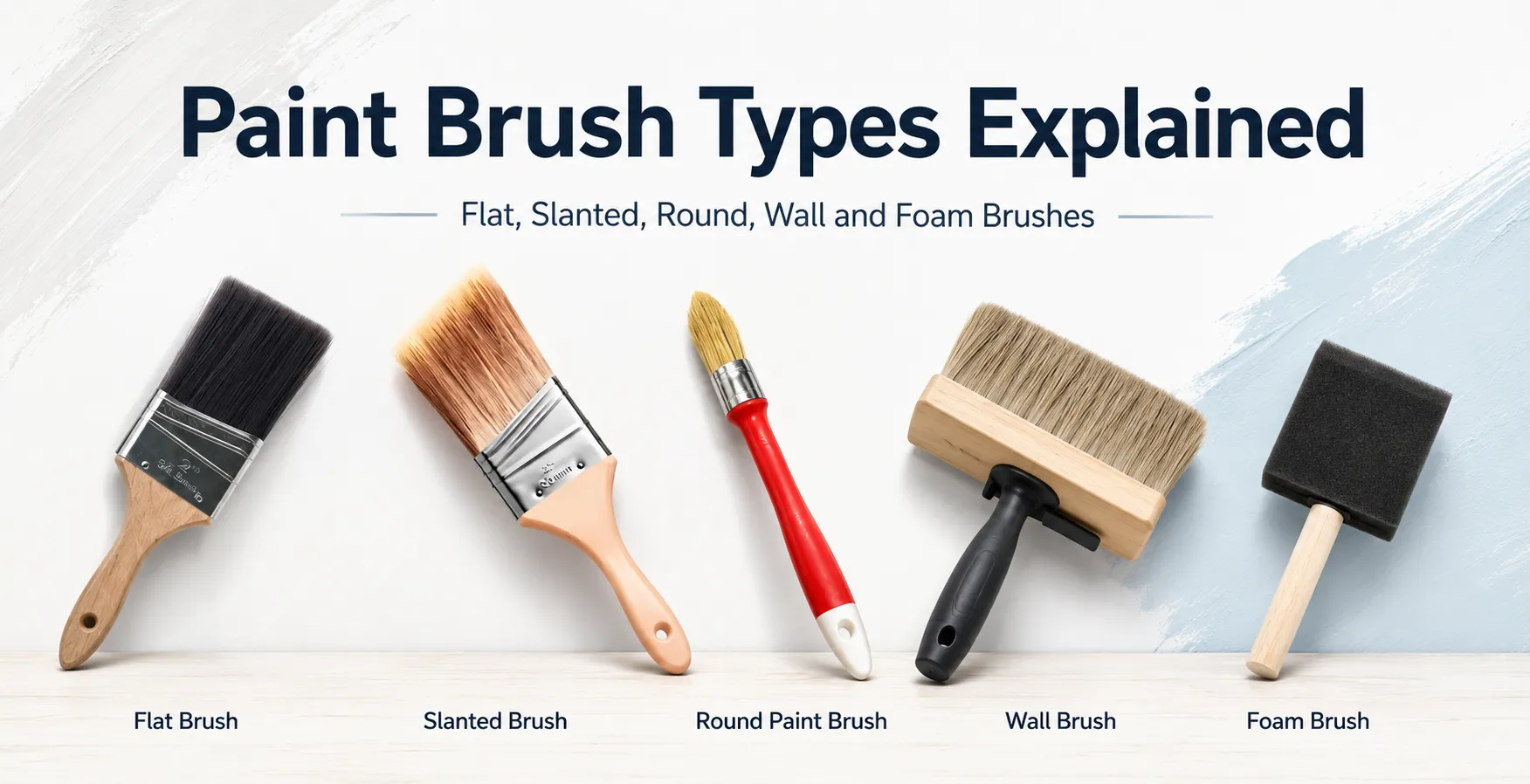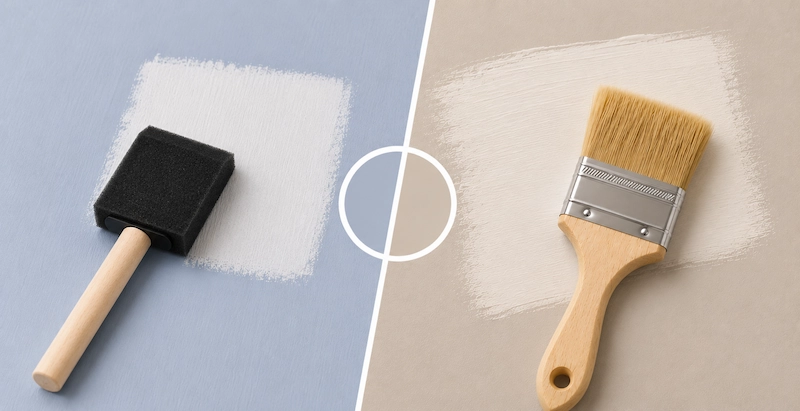
Foam brushes and bristle brushes serve very different purposes in painting and finishing applications. A foam paint brush is typically the better choice for smooth surfaces, stains, varnishes, touch-up work, and projects where a brush-mark-free finish is important. Traditional bristle brushes remain the preferred option for wall painting, trim work, textured surfaces, and applications that require greater paint capacity, control, and durability.
For professional painters, contractors, distributors, and retailers, understanding the strengths and limitations of each brush type is essential when selecting products for specific applications.
A foam paint brush consists of a high-density foam head attached to a plastic or wooden handle. Unlike traditional brushes, foam brushes contain no bristles and apply coatings through absorption and release of liquid finishes.
Foam brushes are widely used for:
Wood stains
Polyurethane finishes
Varnishes
Touch-up painting
Craft projects
Furniture finishing
Their simple design and low cost make them popular for disposable applications where cleaning may not be economical.
A bristle brush uses either natural or synthetic filaments to carry and distribute paint. Professional-grade bristle brushes are designed to hold larger amounts of paint while providing control over application and finish quality.
Bristle brushes are commonly used for:
Compared with foam brushes, bristle brushes are generally more durable and versatile.
Foam Brush vs Bristle Brush: Key Differences
| Feature | Foam Paint Brush | Bristle Brush |
|---|
| Finish Smoothness | Excellent | Good to Excellent |
| Paint Capacity | Low | High |
| Durability | Low | High |
| Reusability | Limited | Excellent |
| Precision | Moderate | High |
| Large Surface Coverage | Poor | Excellent |
| Cost Per Unit | Low | Moderate to High |
| Best Applications | Finishing & Touch-Ups | Painting & Coating |
When Should You Use a Foam Paint Brush?
Applying Stains and Wood Finishes
A foam paint brush is particularly effective when applying stains, varnishes, polyurethane, shellac, and similar wood-finishing products. The foam structure minimizes visible brush marks and helps create a smooth finish.
Furniture Refinishing Projects
Furniture manufacturers and restoration professionals often use foam brushes for applying clear coatings where appearance is critical.
Small Touch-Up Jobs
For minor repairs or paint touch-ups, foam brushes provide a convenient and economical solution.
Disposable Applications
When working with coatings that are difficult to clean, many professionals prefer inexpensive foam brushes that can be discarded after use.
When Should You Use a Bristle Brush?
Interior and Exterior Painting
Bristle brushes hold significantly more paint than foam brushes, making them far more efficient for larger projects.
Cutting-In and Detail Work
Professional painters rely on angled and flat bristle brushes for precision work around trim, ceilings, windows, and corners.
Textured Surfaces
Foam brushes struggle on rough or textured surfaces. Bristle brushes conform more effectively to irregular substrates and ensure complete coverage.
Professional Contracting Projects
Contractors generally choose high-quality bristle brushes because they offer superior durability and lower long-term operating costs.
Which Brush Produces the Smoothest Finish?
For clear finishes such as polyurethane and varnish, foam brushes often produce fewer visible brush marks than standard bristle brushes.
However, premium synthetic bristle brushes designed for fine finishing can achieve comparable results while offering greater durability and control.
For large-scale professional finishing operations, many painters continue to prefer high-quality synthetic brushes due to their versatility.
Can Foam Brushes Be Reused?
Although some foam paint brush products can be cleaned and reused, most are designed for limited-use or disposable applications.
Repeated cleaning may cause:
For professional users, replacement is often more cost-effective than cleaning.
Are Foam Brushes Good for Wall Painting?
Generally, no.
Foam brushes have limited paint capacity and are inefficient for painting large surfaces. Traditional bristle brushes or paint rollers are significantly more productive for wall painting applications.
Foam brushes are best reserved for finishing, touch-ups, and specialty coating tasks.
Cost Comparison: Foam Brush vs Bristle Brush
Initial Purchase Cost
Foam brushes typically cost less per unit than professional-grade bristle brushes.
Long-Term Cost
Bristle brushes often provide better value because they can be reused many times when properly maintained.
For contractors and commercial painters, investing in quality brushes usually reduces overall painting costs.
What Should Wholesale Buyers Consider?
Distributors and retailers should evaluate customer demand and application requirements before building inventory.
Foam paint brush products typically sell well in:
Bristle brushes remain dominant in:
Professional painting markets
Construction projects
Commercial decorating sectors
Industrial coating applications
Many successful suppliers carry both categories to maximize market coverage.
How to Identify High-Quality Foam Brushes
Not all foam brushes perform equally. Buyers should evaluate:
Foam density
Edge precision
Adhesive strength
Handle stability
Solvent resistance
Higher-density foam generally provides smoother finish quality and improved durability.
How to Identify High-Quality Bristle Brushes
These characteristics contribute directly to finish quality and service life.
Frequently Asked Questions
Do foam brushes leave brush marks?
Foam brushes generally leave fewer brush marks than traditional brushes when applying stains and clear finishes.
Can foam brushes be used with paint?
Yes, but they are most effective for small projects and finishing applications rather than large-scale painting.
Why do professional painters prefer bristle brushes?
Bristle brushes provide better paint capacity, control, durability, and versatility across a wide range of painting applications.
Are foam brushes disposable?
Most foam paint brush products are intended for limited-use or disposable applications, although some can be reused if cleaned carefully.
Which brush is better for furniture finishing?
Foam brushes are often preferred for applying stains and clear finishes, while high-quality synthetic bristle brushes are preferred for painted furniture projects.
Conclusion
The choice between a foam paint brush and a bristle brush depends primarily on the coating being applied and the desired finish. Foam brushes excel at smooth finishing applications, stains, varnishes, and touch-up work, while bristle brushes remain the industry standard for painting, decorating, and professional contracting projects. For distributors and wholesalers, maintaining a balanced product portfolio that includes both brush types provides the best opportunity to meet the needs of diverse customer groups.
 English